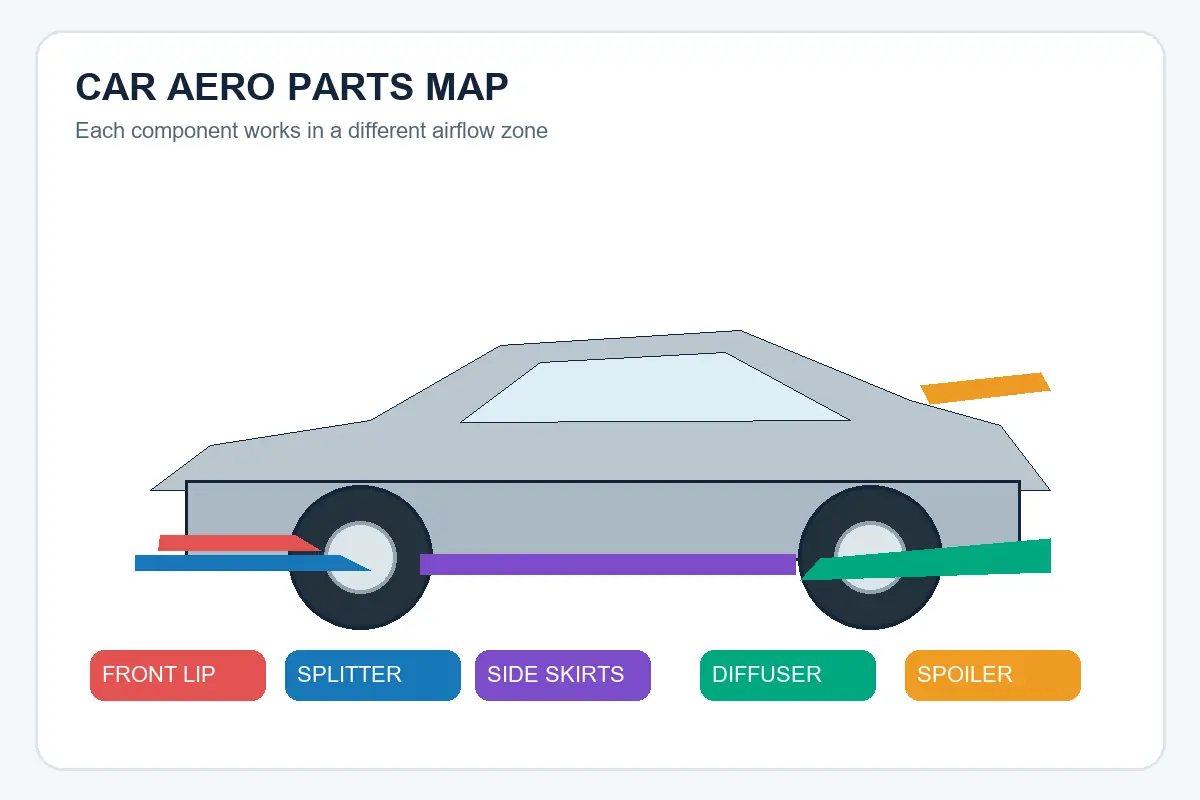
Quick answer: a well-matched Tesla Model 3 Highland body kit normally combines a front lip, side skirts, rear diffuser and spoiler designed for the same 2024+ body shape and trim. Do not assume parts for the 2017–2023 Model 3 fit the Highland, and do not assume standard Highland and Performance bumpers share every mounting point. Verify the production configuration, bumper shape, hole locations, sensors and ground clearance before ordering or drilling.
This guide explains what each exterior component changes, how to build a visually balanced kit, where fitment mistakes happen, what carbon-fiber quality indicators matter and how distributors or private-label buyers can approve a repeatable product specification.
What Is Included in a Tesla Model 3 Highland Body Kit?
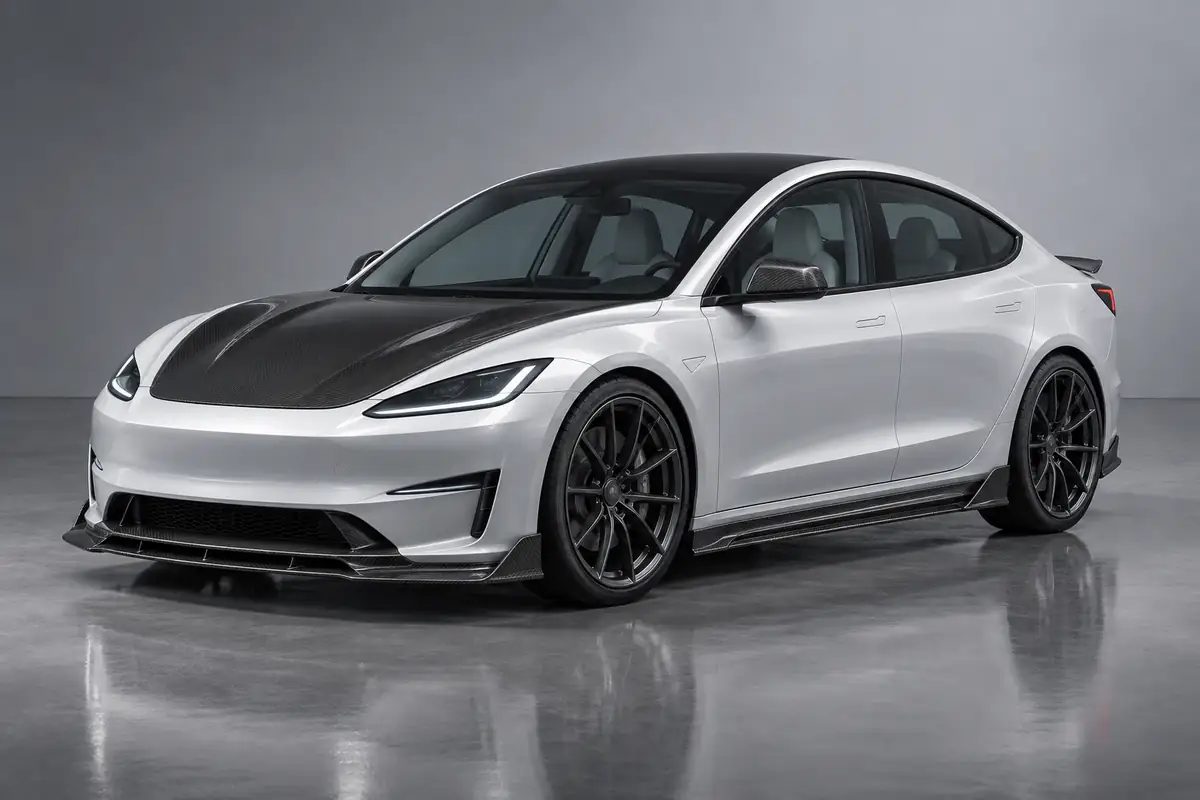
A body kit is not one standardized package. Some sellers use the term for three or four bolt-on pieces; others include replacement bumpers, canards, mirror covers, a hood or a large rear wing. For most street-focused Highland builds, the core package is:
- Front lip: extends the lower front bumper and establishes the visual height of the kit.
- Side skirts: continue the lower line between the axles.
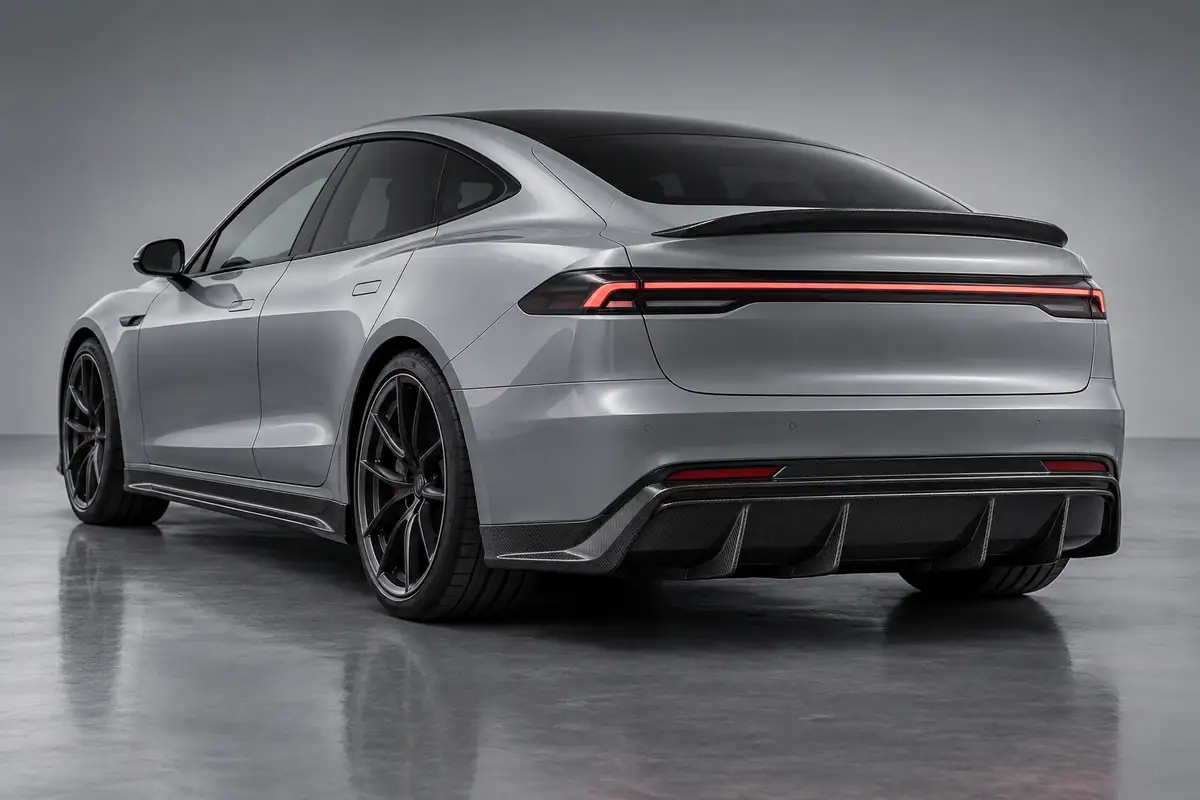
- Rear diffuser: reshapes the lower rear bumper area and completes the ground-effects appearance.
- Spoiler: adds a defined trailing edge to the trunk lid.
Optional parts include a carbon-fiber hood, rear side spats, canards and mirror covers. A complete-looking build does not require every available piece. Consistent projection, surface finish and design language usually matter more than the number of components.
Highland vs Pre-Highland: Why Exterior Parts Usually Do Not Transfer
The Highland refresh retains the Model 3 name, but body-following accessories must be treated as generation-specific. The front and rear styling, lamp forms, bumper contours and surrounding surfaces changed. A lip or diffuser is molded around those details; even a small mismatch can create uneven gaps, incorrect hole positions or local stress.

| Fitment area | 2017–2023 part on Highland | Reason | Recommended action |
|---|---|---|---|
| Front lip | Usually not compatible | Front bumper profile and corner geometry differ | Use a Highland-specific mold and verify trim |
| Side skirts | Do not assume | Length alone does not confirm mounting or end-cap fit | Compare sill profile, holes and wheel-arch junctions |
| Rear diffuser | Usually not compatible | Rear bumper and lower insert geometry differ | Confirm bumper version and sensor clearance |
| Trunk spoiler | High risk | Trunk-lid curvature and contact footprint affect bonding | Use a Highland-specific template and dry-fit |
| Universal trim | Sometimes | It may not depend on a molded body surface | Measure before purchase; avoid safety-critical improvisation |
Tesla’s official Model 3 Owner’s Manual should be consulted for current vehicle, jacking, service and parts guidance. Model-year labels can vary by production date and market, so photos and physical checkpoints are often safer than a year range alone.
Standard Highland vs Model 3 Performance: Confirm the Bumper
“2024+ Model 3” is still not a complete fitment description. The standard rear-wheel-drive or long-range Highland and the Performance version can use different bumper treatments, lower openings, diffuser shapes and factory aerodynamic details. A product developed around one fascia may not sit correctly on another.
Before ordering, provide:
- country or destination market;
- model year and production month;
- standard, Long Range or Performance trim;
- clear front, side, rear and under-bumper photographs;
- VIN details where appropriate, without publishing them publicly;
- confirmation of any prior bumper repair or replacement.
A seller that lists one exterior kit for every Model 3 from 2017 onward should be treated cautiously unless it can show exactly how the mounting system accommodates the different shapes.
Choosing a Model 3 Highland Front Lip
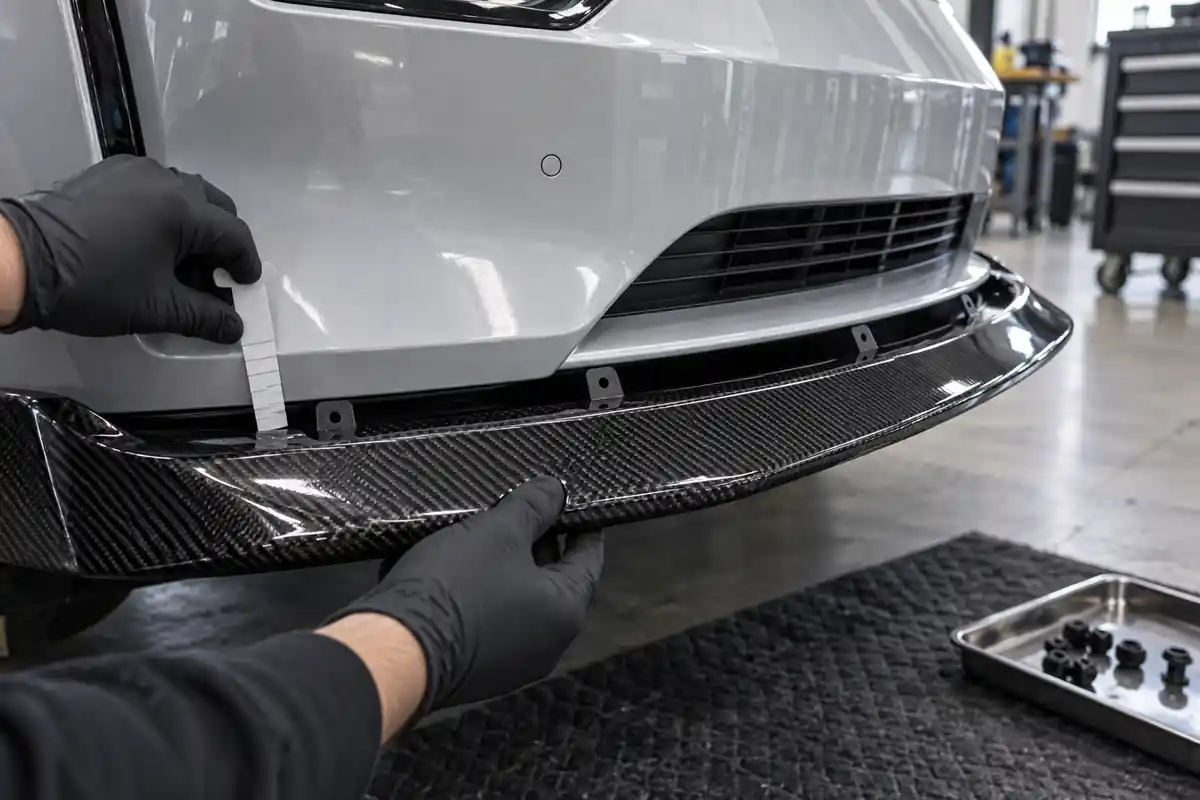
The front lip has the greatest exposure to steep ramps, parking blocks and road debris. It also sets the visual tone for the rest of the kit. A street-focused lip should follow the bumper closely, maintain practical clearance and use a mounting method appropriate for its projection.
Noah’s Model 3 Highland front lip provides a vehicle-specific starting point for an exterior package. Buyers should still confirm the bumper version and final mounting contents in the quotation.
Front-Lip Checks Before Installation
- Place the lip against the clean bumper without adhesive or drilling.
- Center it using fixed bumper landmarks, not only the outer corners.
- Check left-right symmetry and the gap along the full contact edge.
- Confirm fasteners will not interfere with undertrays, wiring or service points.
- Measure the lowest point after installation and consider loaded ride height.
- Use temporary tape or clamps that cannot damage the clear coat during the trial fit.
If a product is advertised as producing measurable aerodynamic load, ask for the test configuration and mounting rationale. A cosmetic lip and a structural splitter are not the same. Noah’s front lip vs splitter guide explains the distinction in detail.
Choosing Model 3 Highland Side Skirts
Side skirts connect the front and rear visual lines. They can make the car appear lower without changing suspension height, but projection that looks attractive in photographs may become inconvenient near curbs, narrow parking spaces or vehicle lifts.
For the Highland, inspect how the skirt terminates at both wheel arches, whether it blocks factory lifting access and whether its mounting creates a trap for water or debris. Long carbon parts also need adequate stiffness and packaging support to avoid twist during shipping.
See Noah’s Model 3 Highland side skirts for a vehicle-specific application. For B2B orders, approve both left and right parts together; matching weave direction and gloss level are part of the visual specification.
Choosing a Model 3 Highland Rear Diffuser
A rear diffuser can be a bumper styling component, a functional underbody device or a combination of both. Large fins do not prove aerodynamic performance. Inlet flow, expansion geometry, ride height, upstream floor condition and a clear exit all influence function.
For a street body kit, start with fitment and serviceability:
- confirm the exact rear bumper and trim;
- check parking sensor and reflector clearance;
- verify tow-hook or emergency access where applicable;
- inspect clearance around underbody panels and fasteners;
- ensure the part does not contact the suspension or tires through their travel;
- confirm that water can drain and dirt can be removed.
Noah’s Tesla Model 3 Highland diffuser can be combined with matching lower-body components, subject to configuration verification.
Choosing a Model 3 Highland Spoiler
A subtle trunk spoiler is often the easiest way to finish the kit without making the rear visually heavy. Its most important fitment factors are trunk-lid curvature, contact footprint, end alignment and adhesive preparation. A spoiler that must be forced to match the lid is not a good fit; stored stress can weaken the bond over time.
Noah’s Model 3 Highland spoiler is intended for the refreshed application. Before bonding, position it with removable reference tape, check symmetry from several angles and follow the specified surface-preparation and curing instructions.
Should You Add a Carbon Fiber Hood?
A carbon-fiber hood creates a much stronger visual change than lower-body trim. It may reduce panel mass depending on construction, but buyers should not assume a specific weight saving without comparing complete ready-to-install parts, including brackets, latches, reinforcements and finish.
A hood is also safety-critical. Check latch geometry, hinge points, washer components, sealing, panel gaps and any required secondary retention for the intended use and jurisdiction. Professional installation and inspection are strongly recommended. Noah offers a Model 3 Highland carbon-fiber hood; final fitment and supplied hardware should be confirmed against the actual vehicle.
Gloss or Matte Carbon Fiber?
Gloss carbon emphasizes weave depth and usually matches other clear-coated carbon accessories. Matte or satin finishes produce fewer sharp reflections and can look more restrained, but finish names are not perfectly standardized between suppliers.
For a full kit, approve one physical finish sample under daylight and workshop lighting. Record:
- fabric pattern and weave scale;
- fiber orientation on each visible surface;
- clear-coat gloss or matte range;
- acceptable color variation between components;
- UV-protection and care requirements;
- limits for pinholes, print-through, dust and surface distortion.
Material appearance alone does not establish structural quality. The laminate, resin, consolidation, bonded inserts, trimming and edge sealing all affect durability. For broader material context, see Noah’s carbon fiber car modification guide.
Complete Kit or Individual Components?
| Approach | Best for | Advantages | Tradeoffs |
|---|---|---|---|
| Front lip only | Subtle first modification | Strong visual impact with fewer parts | Front can look lower than the sides and rear |
| Spoiler only | Low-risk appearance update | Simple, restrained and easy to pair later | Does not change the lower-body profile |
| Lip + side skirts | Balanced street stance | Creates a continuous lower line | More clearance and lift-point considerations |
| Lip + skirts + diffuser + spoiler | Complete exterior theme | Most coordinated result when one design family is used | Higher cost, longer installation and more fitment checkpoints |
| Full kit + hood | High-impact showcase build | Strong carbon-fiber identity | Requires careful finish matching and professional hood installation |
Recommended Installation Order
Installing every part at once can hide the source of a fitment problem. A staged process makes alignment and diagnosis easier.
- Inspect the vehicle: document existing bumper damage, paint condition and prior repairs.
- Inventory the kit: match parts, brackets and fasteners to the packing list.
- Dry-fit every component: do not permanently bond or drill the first piece before checking the complete visual line.
- Install the side skirts: establish the lower reference between the wheel arches.
- Align the front lip and rear diffuser: match their apparent height and projection to the skirts.
- Position the spoiler: center it on the trunk and verify the viewing angle from both sides.
- Install and cure: use the product-specific fasteners, adhesive and cure time.
- Reinspect: check clearance, fasteners and bond edges after the initial driving period.
Do not work under a vehicle supported only by a jack. Follow the current vehicle guidance for lifting and service. If drilling, wiring changes, structural mounting or hood replacement is involved, use a qualified installer.
Does a Body Kit Affect Range, Warranty or Sensors?
Driving Range
Any exterior change can alter mass, drag, lift or local airflow, but the practical range effect cannot be predicted from appearance alone. A supplier should not promise improved efficiency unless the exact vehicle and complete configuration were tested under disclosed conditions. Tire choice, speed, weather and driving style can easily dominate small aero differences.
Warranty
Aftermarket installation does not have one universal warranty outcome. Coverage depends on the market, applicable law, the terms in force and whether a modification caused or contributed to the problem. Keep invoices and installation records, use reversible methods where appropriate and consult Tesla or a qualified local advisor for a specific concern.
Sensors and Service Access
Do not obstruct parking sensors, cameras, reflectors, cooling openings, tow points or underbody fasteners. The kit should also preserve safe lifting and routine service access. A part that appears to clear a sensor may still affect its field or create false detections; check vehicle warnings and function after installation.
How to Judge Aerodynamic Claims
Several premium competitors present complete packages and CFD-led development. For example, Unplugged Performance’s 2024+ Model 3 Performance aero kit identifies its trim-specific components and development positioning, while ADRO’s vehicle collection separates Highland and Highland Performance applications. That is useful context, but data should still be read carefully. Ask whether results apply to the same trim, ride height, wheel configuration and full set of parts. Check the test speed, yaw condition and whether figures are predicted, measured or correlated.
A product without published aero data can still be a well-made styling part. The honest description is then appearance and fitment—not guaranteed downforce. This distinction strengthens credibility and prevents a cosmetic claim from being treated as a safety or performance specification.
B2B Sample Approval and Batch Quality Control
For distributors, tuning brands and private-label programs, one attractive photograph is not enough. Approve a golden sample and convert it into measurable acceptance criteria.

- Fitment definition: exact trim, bumper and production configuration.
- Part identity: left/right designation, SKU, revision and mold version.
- Dimensional criteria: hole locations, reference lengths, curvature and mating surfaces.
- Visual criteria: weave direction, gloss level, pinholes, scratches and edge finish.
- Hardware: fastener quantities, bracket finish, adhesive requirement and installation guide.
- Trial installation: photos and a fitment record from the correct vehicle.
- Packaging: rigid support for long skirts, corner protection and separation between clear-coated surfaces.
- Change control: approval required before altering laminate, finish, mounting or packaging.
Noah Automotive supports vehicle-specific carbon fiber auto body parts, wholesale supply and OEM/ODM projects. Buyers can provide quantity, market, branding, packaging and vehicle details through the contact page for a fitment and quotation review.
Frequently Asked Questions
Do 2017–2023 Model 3 body-kit parts fit the Highland?
Usually not when the part follows the front bumper, rear bumper, trunk or another changed body contour. Use a Highland-specific application and verify the actual vehicle before drilling or bonding.
Do standard Highland body-kit parts fit the Model 3 Performance?
Not automatically. Performance bumper and lower-body details may differ. Confirm the product was developed for the exact trim and compare mounting points and surrounding geometry.
What should I install first on a Model 3 Highland?
For a subtle build, start with a vehicle-specific spoiler or front lip. For a coordinated lower-body look, dry-fit the side skirts, front lip and rear diffuser together before permanently installing any one component.
Is a carbon-fiber body kit lighter than ABS?
It can be, but construction and complete installed weight matter. Compare finished parts with their brackets and hardware rather than relying only on material names.
Will a body kit improve Model 3 Highland range?
Do not assume it will. Range effects require testing of the exact vehicle and full configuration. Styling parts without validated data should not be marketed as efficiency upgrades.
Can a Model 3 Highland body kit be private labeled?
Yes, subject to supplier capability, MOQ and the approved specification. Branding can include logos, labels, installation instructions and packaging, while fitment and finish should be locked through a golden sample.
Final Buying Checklist
- Confirm Highland generation, market, production date and exact trim.
- Match the front and rear bumper version—not only the model name.
- Request installed photos of the same configuration.
- Verify material construction, finish and weave direction.
- Review the hardware list and installation method.
- Measure ground clearance and check lifting/service access.
- Dry-fit the complete visual package before drilling or bonding.
- Require evidence before repeating performance or range claims.
- For B2B orders, approve fitment, QC limits and packaging in writing.
Conclusion
The best Tesla Model 3 Highland body kit is not necessarily the one with the most pieces. It is the package that fits the exact bumper and trim, maintains useful clearance, uses an appropriate mounting system and presents one consistent design language from front to rear.
Treat the Highland as its own exterior-fitment generation, verify Performance compatibility separately and distinguish styling from validated aerodynamic function. Whether you are modifying one vehicle or sourcing a private-label range, careful dry-fitting and a documented approval standard are the most reliable ways to avoid costly returns and inconsistent results.