The automotive aftermarket is undergoing a materials revolution. Carbon fiber — once the exclusive domain of Formula 1 cars and hypercars costing millions — has become increasingly accessible to everyday enthusiasts. But what exactly makes carbon fiber car modification so compelling, and is it worth the investment for your vehicle?
This comprehensive guide explores everything you need to know about carbon fiber automotive upgrades: from weight savings and performance benefits to part selection, installation, and long-term value. Whether you’re driving a track day special or a daily commuter, carbon fiber can transform your driving experience.
What Is Carbon Fiber Car Modification?
Carbon fiber car modification involves replacing stock vehicle components — such as body panels, interior trim, and performance parts — with equivalent parts manufactured from carbon fiber reinforced polymer (CFRP). The process typically uses either dry carbon (vacuum infusion) or prepreg (autoclave-cured) manufacturing methods, each offering distinct characteristics.
The global carbon fiber automotive market is projected to grow from approximately $1.2 billion in 2025 to over $2.8 billion by 2030, reflecting a compound annual growth rate (CAGR) of 18-20%. This surge is driven primarily by two factors: declining material costs from increased Chinese production capacity, and rising demand for vehicle lightweighting to meet fuel efficiency and EV range targets.

The Physics: Why Carbon Fiber Weighs So Much Less
Understanding the weight advantage requires basic materials science of Carbon Fiber Car Modification. CFRP has a density of approximately 1.6 g/cm³, compared to:
- Steel: 7.85 g/cm³ (nearly 5× denser)
- Aluminum: 2.70 g/cm³ (69% heavier)
- Fiberglass: 2.0-2.5 g/cm³ (25-56% heavier)
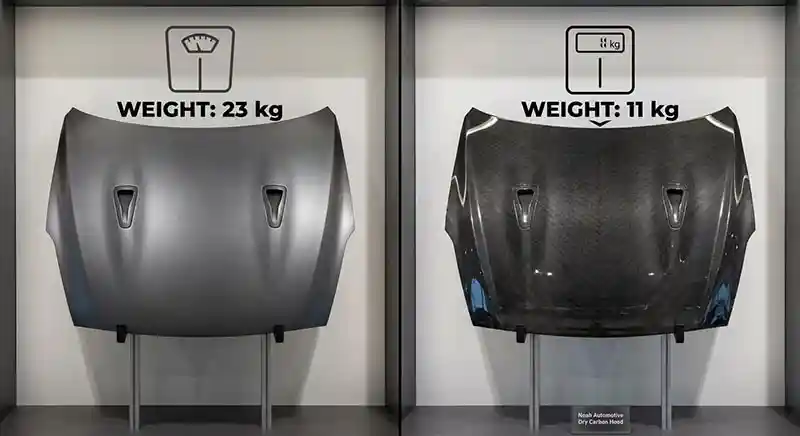
Yet carbon fiber’s tensile strength can exceed 3,500 MPa — several times that of structural steel. When properly engineered, a Carbon Fiber Car Modification hood can weigh 60-70% less than its aluminum OEM counterpart, typically saving 8-15 kg (18-33 lbs) on a single component. For a full body kit replacement, total weight savings of 30-50 kg are achievable.
The Unsprung Weight Multiplier Effect
Weight reduction isn’t just about total mass — placement matters enormously. Physics tells us that reducing unsprung weight (components not supported by the suspension) has 10× the handling benefit of reducing equal sprung weight. While Carbon Fiber Car Modification body panels affect sprung mass, the principle extends to suspension components, wheels, and brake assemblies where weight savings deliver outsized performance gains.
Core Benefits of Carbon Fiber Automotive Upgrades
1. Accelerated Performance
Every kilogram removed from a vehicle improves acceleration, braking, and cornering. The relationship is quantifiable: a 10% weight reduction typically yields:
- 3-5% improvement in 0-100 km/h acceleration times
- 2-4% reduction in braking distances
- Noticeably sharper turn-in response and reduced body roll
For a 1,500 kg sports sedan, a 40 kg carbon fiber upgrade represents a 2.7% mass reduction — enough to shave approximately 0.15 seconds off a 0-100 km/h time on a stock car.
2. Enhanced Aerodynamics
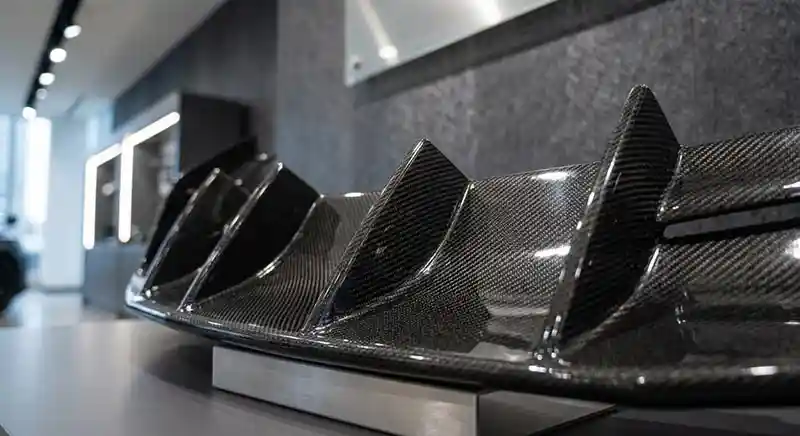
Modern carbon fiber parts are engineered not just for weight savings but for aerodynamic optimization. Front lip splitters, rear diffusers, and wing assemblies manage airflow to increase downforce and reduce drag. A well-designed carbon fiber front lip can generate 30-50 kg of downforce at 150 km/h while simultaneously reducing lift at the front axle.
Unlike stamped metal panels that require additional aerodynamic add-ons, carbon fiber’s molding flexibility allows complex contours to be integrated directly into the part geometry — eliminating drag-inducing gaps and fasteners.
3. Corrosion and UV Resistance
Carbon fiber car modification parts don’t rust, corrode, or degrade under UV exposure when properly finished with quality clear coat. This longevity advantage is particularly valuable for:
- Coastal environments with salt air exposure
- Regions with harsh winter road salt conditions
- Vehicles used in track environments with repeated high-G loading
Properly manufactured carbon fiber car modification parts maintain structural integrity for the lifetime of the vehicle — a critical consideration for investment protection.
4. Aesthetic Distinction
The visible weave pattern of carbon fiber provides an immediately recognizable premium aesthetic. From aggressive front splitters to subtle interior trim pieces, carbon fiber signals performance intent without requiring engine modifications. The material’s natural black appearance pairs seamlessly with any paint color.
Popular Carbon Fiber Car Modification Parts
Exterior Body Components
Front Lip Splitters: The most visible and commonly modified component. A quality carbon fiber car modification front lip attaches to the lower bumper edge, managing airflow under the vehicle while adding visual aggression. Typical weight: 1.5-3 kg vs. 4-6 kg for OEM plastic alternatives.
Rear Wings and Spoilers: Fixed or adjustable carbon fiber rear wings provide measurable downforce improvements. For track use, a properly sized wing can add 50-100 kg of rear downforce at highway speeds, significantly improving high-speed stability and cornering grip.
Side Skirts: Aerodynamic side skirts manage airflow along the vehicle’s flanks, reducing turbulence and improving fuel efficiency. Carbon fiber versions save 1-2 kg per piece compared to stock.
Hoods and Trunk Lids: These are high-impact carbon fiber car modifications because they reduce front-end and rear-end weight respectively — masses that disproportionately affect handling balance. A carbon fiber hood typically saves 8-12 kg; a trunk lid, 5-8 kg.
Grille and Mirror Caps: Smaller components offering 0.2-0.5 kg savings each while contributing to the cohesive carbon fiber appearance.
Interior Components
- Dashboard trim and accent panels
- Shift knobs and paddle shifters
- Air vent surrounds
- Door handle inserts
- Roof liners (reducing overhead mass)
Performance Parts
Beyond aesthetics, carbon fiber appears in functional performance components:
- Drive shafts: Reducing rotational mass improves throttle response
- Suspension arms: Lower unsprung weight improves wheel control
- Brake ducts: Optimized airflow for cooling without weight penalty
- Battery covers: Particularly valuable in electric vehicles where every kilogram extends range
Dry Carbon vs. Prepreg: Understanding Manufacturing Differences
Not all carbon fiber is created equal. The manufacturing process significantly affects performance, appearance, and price:
| Specification | Dry Carbon (Vacuum Infusion) | Prepreg (Autoclave Cured) |
|---|---|---|
| Fiber-to-resin ratio | Lower (more resin) | Higher (lesser resin) |
| Weight | Slightly heavier | Lightest option |
| Strength | Good | Excellent |
| Thickness consistency | Variable | Highly consistent |
| Surface finish | Visible weave pattern | Can be gloss or satin |
| Production cycle | Hours | 8-12 hours |
| Unit cost | $ | $$ (2-3× dry carbon) |
| Ideal applications | Body kits, aesthetic panels | Structural parts, safety components |
For most automotive aftermarket body kit applications, dry carbon delivers the best balance of weight savings, aesthetics, and cost. Prepreg is reserved for structural components where maximum strength is critical.
Real-World Weight Savings by Vehicle
Here’s what to expect when upgrading common components across popular platforms:
BMW M4 G82 (2021-2025)
| Component | OEM Weight | Carbon Fiber Weight | Savings |
|---|---|---|---|
| Hood | 18 kg | 6 kg | 12 kg |
| Front bumper lip | 3 kg | 1 kg | 2 kg |
| Rear diffuser | 4 kg | 1.5 kg | 2.5 kg |
| Side skirts (pair) | 5 kg | 2 kg | 3 kg |
| Rear spoiler | 2 kg | 0.8 kg | 1.2 kg |
| Total | 32 kg | 11.3 kg | 20.7 kg |
Welcome click the link to see the carbon fiber parts for BMW
Tesla Model 3 (2017-2025)
| Component | OEM Weight | Carbon Fiber Weight | Savings |
|---|---|---|---|
| Trunk lid | 14 kg | 5 kg | 9 kg |
| Front lip | 2.5 kg | 0.9 kg | 1.6 kg |
| Rear spoiler | 1.5 kg | 0.5 kg | 1 kg |
| Total | 18 kg | 6.4 kg | 11.6 kg |
For electric vehicles like the Model 3, these weight savings directly translate to range extension. Industry estimates suggest 30-40 kg of total weight reduction can yield 5-10 km of additional range per charge, depending on driving conditions. Click the link to see more Tesla modification parts.
Quality Indicators: How to Identify Good Carbon Fiber Parts
The automotive aftermarket is flooded with low-quality carbon fiber car modification products. Here’s how to evaluate quality:
1. Weave Pattern Consistency
Quality parts display uniform, tight weave patterns without visible resin pooling or dry spots. The 2×2 twill weave is most common in automotive applications; 3K (finer) offers a more refined appearance, while 12K (coarser) is more economical.
2. Edge Finishing
Inspect cut edges for uniformity. Quality parts show consistent thickness throughout with clean, unmelted edges. Rough or uneven edges indicate poor molding or post-processing.
3. Surface Gloss and Clear Coat
Premium carbon fiber parts receive multiple layers of UV-resistant clear coat. The surface should exhibit a deep, reflective finish without orange peel texture. Clear coat quality directly affects long-term appearance and protection.
4. Fitment Accuracy
Test fit before installing adhesive or fasteners. Quality parts match OEM mounting points precisely with consistent gaps (typically 2-3 mm) along panel edges. Poor fitment indicates inferior mold tooling.
5. Manufacturer Credentials
Reputable manufacturers provide:
- Material certification (fiber grade, resin type)
- Quality testing documentation (universal testing machine results)
- Warranty coverage (minimum 1 year for structural parts)
- OEM/ODM capabilities indicating production scale and expertise

Installation Considerations
Carbon fiber parts generally install using the same attachment points as OEM components. Key considerations:
- Adhesive vs. mechanical fasteners: Most body kits use automotive-grade 3M VHB tape plus existing fastener points. Ensure surface preparation is thorough (clean, degrease, and allow to dry completely).
- Gap adjustment: Some flexibility exists in positioning. Use spacers or shims to achieve consistent panel gaps.
- Paint matching: Carbon fiber parts can be painted, but the weave pattern may show through translucent colors. Matte or satin finishes hide weave patterns better than high-gloss paints.
- Professional installation: For complex assemblies or structural components, professional installation ensures proper fitment and eliminates warranty issues.
Cost Analysis: Is Carbon Fiber Worth the Automotive Aftermarket?
Pricing varies widely based on manufacturer, part complexity, and material grade:
| Component Category | Budget Range | Premium Range | Typical Savings |
|---|---|---|---|
| Front lip | $150-300 | $400-800 | 1.5-2.5 kg |
| Side skirts (pair) | $300-600 | $800-1,500 | 3-5 kg |
| Rear diffuser | $250-500 | $600-1,200 | 2-3 kg |
| Hood | $800-1,500 | $2,000-4,000 | 8-12 kg |
| Full body kit | $2,000-4,000 | $5,000-10,000 | 25-40 kg |
When evaluating value, consider total cost of ownership:
- Longevity: Quality carbon fiber lasts the vehicle’s lifetime without degradation
- Resale value: Cohesive carbon fiber appearance can enhance perceived value
- Performance gains: Weight reduction improves acceleration and handling measurably
- Maintenance: No repainting required; cleaning is simple (mild soap and water)
Future Trends in Carbon Fiber Automotive Applications
Several trends are shaping the future of carbon fiber in automotive modification:
Large-Tow Carbon Fiber Expansion
Chinese manufacturers including Zhejiang Wanxing, Guangwei Composites, and Zhongfu Shenying have dramatically expanded 24K and 48K large-tow production. This has pushed raw carbon fiber prices down 30-50% since 2022, making it increasingly viable for volume automotive applications.
Hybrid Manufacturing Integration
Progressive hybrid manufacturing — combining traditional metal forming with composite bonding — enables partial carbon fiber integration without full vehicle redesign. Several OEMs are already adopting this approach for specific high-impact components.
Thermoplastic Composite Development
Traditional thermoset carbon fiber composites are difficult to recycle. Thermoplastic matrix composites offer recyclability while maintaining comparable mechanical properties, potentially addressing sustainability concerns as regulations tighten.
Frequently Asked Questions
How much weight can I realistically save with carbon fiber parts?
Expect 30-60% weight reduction compared to equivalent metal or plastic parts. A full body kit replacement typically saves 25-40 kg total, with the hood and trunk lid providing the largest individual savings.
Will carbon fiber parts crack or chip in normal use?
Quality carbon fiber parts are remarkably durable. They resist chipping, cracking, and impact damage far better than fiberglass alternatives. However, severe impacts can cause delamination or fracture — proper driving and parking practices minimize this risk.
Can I paint carbon fiber parts?
Yes. Carbon fiber can be painted using standard automotive procedures. However, the weave pattern may show through translucent or light colors. Matte, satin, or dark solid colors hide the weave pattern most effectively.
Is carbon fiber safe for structural applications?
Absolutely. Carbon fiber is used extensively in aerospace, racing, and safety-critical automotive applications worldwide. Properly engineered CFRP components meet or exceed strength requirements for their intended applications.
How do I maintain carbon fiber parts?
Cleaning is straightforward: use mild automotive soap and water with a soft microfiber cloth. Avoid abrasive cleaners or polishes containing waxes that can fill the weave texture. Apply a UV-protectant sealant annually to preserve clear coat integrity.
What’s the difference between wet carbon and dry carbon?
“Wet carbon” refers to pre-preg (pre-impregnated) carbon fiber cured under pressure in an autoclave, producing the strongest, lightest parts. “Dry carbon” uses vacuum infusion, offering excellent aesthetics at lower cost. Both are valid choices depending on application requirements and budget.
Conclusion: Making the Right Choice
Carbon fiber car modification offers measurable performance benefits, distinctive aesthetics, and long-term durability. While upfront costs exceed alternative materials, the total value proposition — weight savings, handling improvement, corrosion resistance, and lasting appearance — makes it a compelling upgrade for enthusiasts and fleet operators alike.
The key to success lies in selecting quality parts from reputable manufacturers who understand both the material science and the specific vehicle applications. With 14+ years of manufacturing experience and full OEM/ODM capabilities, Noah Automotive specializes in carbon fiber car modification solutions that balance performance, precision, and value across automotive, marine, and industrial applications.
Whether you’re modifying a single component or undertaking a complete body kit installation, carbon fiber represents one of the most effective ways to enhance your vehicle’s performance and appearance while reducing weight across the board.
Ready to explore carbon fiber upgrades for your vehicle? Contact our engineering team for custom solutions tailored to your specific application, whether it’s automotive body kits, performance components, or specialized industrial parts.