Quick answer: to clean carbon fiber car parts safely, first identify the surface finish, rinse away loose grit, hand-wash with a pH-neutral automotive shampoo and a clean microfiber mitt, rinse thoroughly, then dry with soft towels or filtered air. Treat glossy clear-coated carbon much like quality automotive paint. Do not polish matte carbon, use harsh solvents, scrub exposed fibers or attempt to hide cracks and delamination with a coating.
This guide explains how to clean carbon fiber car parts, protect them from sunlight and contamination, diagnose yellowing or haze, and decide when a defect needs professional inspection instead of detailing.

First Identify the Carbon Fiber Surface
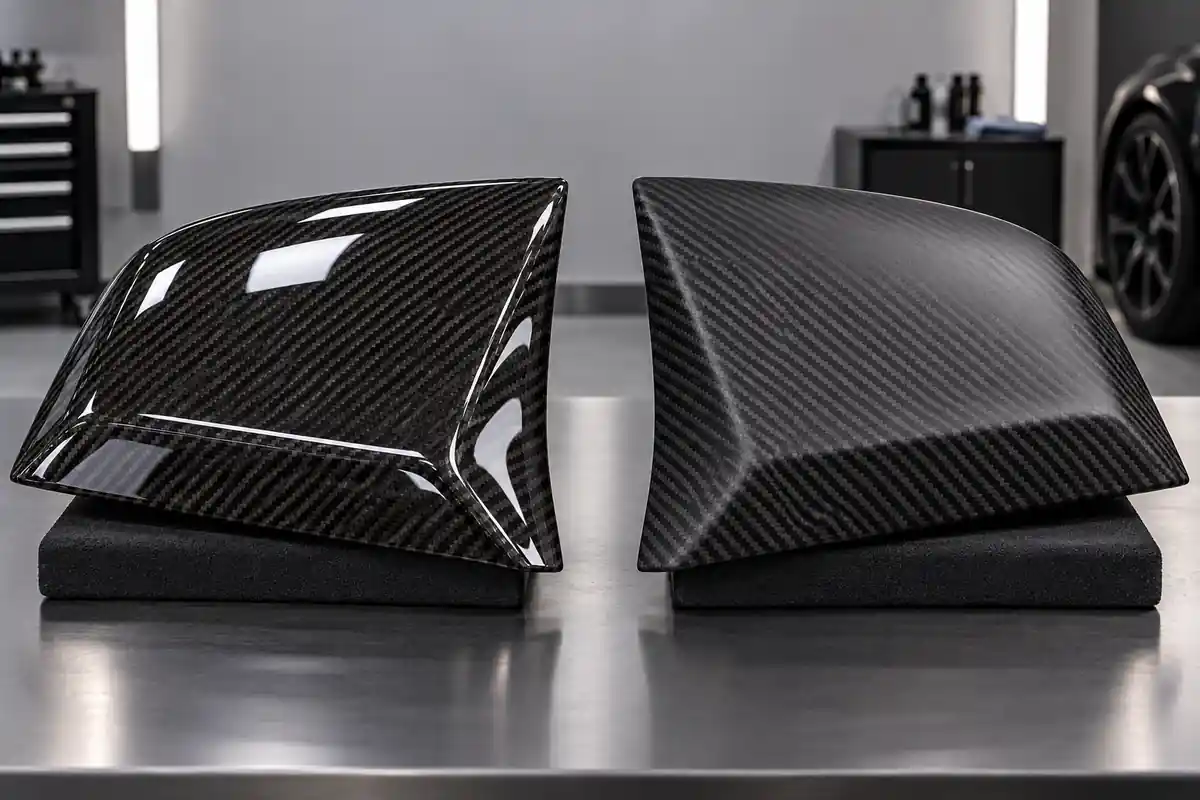
“Carbon fiber” describes the reinforcement, not the surface your wash mitt touches. Most finished automotive components are protected by clear coat, a resin-rich outer layer, paint, matte coating or paint-protection film. Maintenance should match that outer surface.
| Surface type | How it usually looks | General care approach | Main caution |
|---|---|---|---|
| Gloss clear coat | Deep reflections over visible weave | Wash like quality automotive paint; correct cautiously if thickness and condition permit | Aggressive polishing can thin or overheat the clear coat |
| Matte or satin finish | Diffuse reflection with little shine | Use matte-safe shampoo and protection specifically approved for the finish | Polishing creates glossy patches that may be irreversible |
| Resin-rich or gel-like surface | Visible weave beneath a molded outer resin layer | Follow the manufacturer’s chemical and correction limits | Solvent and heat sensitivity can differ from automotive clear coat |
| Painted carbon composite | Fiber is hidden under color | Treat the paint system according to its specification | Damage underneath cannot be judged by weave visibility |
| PPF-covered carbon | Transparent film with seams at selected edges | Use products compatible with the film | Avoid lifting edges or trapping chemicals at seams |
| Exposed or damaged fibers | Dry texture, fraying, open edge or broken laminate | Stop routine detailing and seek inspection | Water and chemicals may enter damaged laminate or bonded joints |
If you do not know the finish, check the supplier’s care instructions and test any product on a small, inconspicuous area. Noah’s automotive carbon fiber guide explains the underlying composite, while this article focuses on the surface system that requires routine care.
What You Need to Clean Carbon Fiber Car Parts
- clean water and a gentle rinse source;
- pH-neutral automotive shampoo;
- clean microfiber or other manufacturer-approved wash media;
- separate soft brushes only for crevices, if the finish permits;
- multiple clean drying towels or filtered vehicle-drying air;
- a finish-compatible spot cleaner for specific contamination;
- good inspection lighting.
Separate wash media for lower components such as front lips, side skirts and diffusers. These areas collect more abrasive road grit than a hood or trunk spoiler. Reusing the same mitt on upper panels can transfer particles and create swirls.
How to Clean Carbon Fiber Car Parts Step by Step
1. Work on a Cool Surface
Park in shade and allow the part to cool. Hot surfaces accelerate water evaporation, which raises the risk of spotting and can cause cleaning chemicals to dry before rinsing. Engine-bay carbon parts may remain hot after the exterior feels cool.
2. Inspect Before Washing
Look for lifted PPF edges, loose fasteners, chipped clear coat, open laminate edges, cracks around mounting holes and impact damage. Photograph a suspicious defect before cleaning. If the part is loose or structurally damaged, correct the mounting or obtain a professional assessment first.
3. Rinse Away Loose Dirt
Use a gentle, controlled rinse to remove loose dust and grit. High-pressure equipment is not automatically forbidden, but it should be kept at a safe distance and never concentrated on chipped clear coat, exposed laminate, film edges, decals, seals or bonded joints. Follow the equipment and part manufacturer’s instructions.
4. Hand-Wash with Minimal Pressure
Apply plenty of lubricating shampoo solution and move the mitt in straight, overlapping passes. Do not grind dried contamination into the surface. Rinse the mitt frequently and switch to clean media when it has touched the ground or heavily contaminated lower parts.
5. Rinse Thoroughly
Remove shampoo from edges, vents, mounting recesses and the gap between the carbon part and the vehicle. Residue trapped in these areas can streak later or hold dirt against the finish.
6. Dry Without Rubbing Grit
Use clean, soft towels with light pressure or filtered drying air. Blot sensitive edges rather than dragging a towel across them. Inspect for remaining contamination only after the surface is clean and dry.
Cleaning Gloss vs Matte Carbon Fiber
Gloss Carbon Fiber
Gloss clear-coated carbon is normally washed like high-quality paint. After washing, compatible waxes, sealants, coatings or film may be used according to their instructions. Light defects may sometimes be machine-polished, but only when the outer finish is sound and there is enough coating thickness to correct safely.
Matte or Satin Carbon Fiber
Matte surfaces depend on a uniformly textured finish. Conventional polish, abrasive cleaner and many gloss-enhancing products can create uneven shiny areas. Use products explicitly approved for matte finishes and avoid spot polishing unless the finish manufacturer provides a repair method.
When a full kit combines gloss and matte parts, do not assume one maintenance product is suitable for both. Mask adjacent surfaces or apply products carefully to prevent transfer.
How to Remove Common Contaminants
| Contaminant | Safer first response | What to avoid |
|---|---|---|
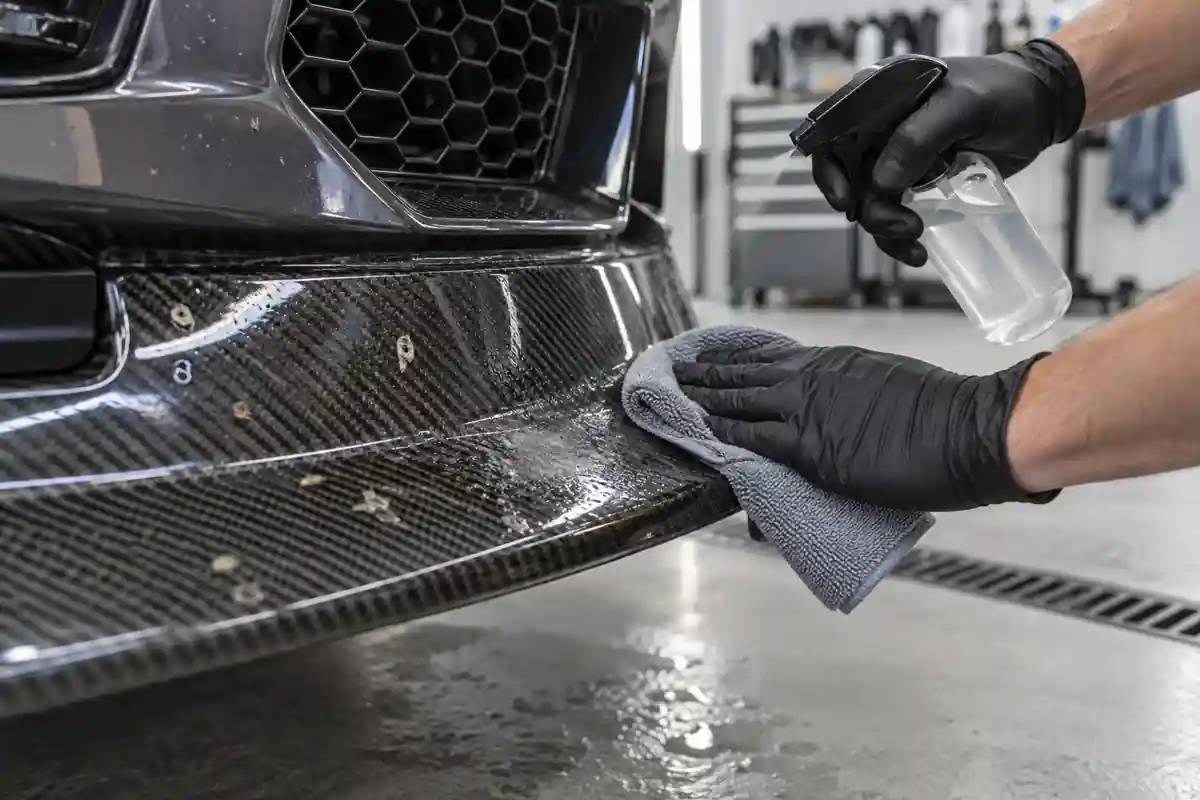
| Bird droppings | Remove promptly; soften with water or a compatible detail product before lifting gently | Dry scraping or allowing residue to bake in sunlight |
| Bug residue | Pre-soak and use a finish-compatible bug remover after a test spot | Abrasive pads and hard fingernail scraping |
| Mineral water spots | Wash first, then use a compatible spot remover at the recommended dwell time | Strong acids or repeated aggressive polishing |
| Tar and road film | Use a manufacturer-approved automotive tar remover sparingly | Unidentified solvent, gasoline or acetone |
| Winter salt | Rinse promptly, including edges and mounting recesses | Leaving concentrated salt around fasteners and bonded seams |
| Tree sap | Soften and use a compatible dedicated remover | Forcing hardened sap off with a blade |
Compatibility matters more than product category. A chemical advertised as safe for factory paint may not be approved for every matte coating, repair clear coat, PPF adhesive edge or resin-rich finish.
What Should You Avoid?
- household scouring pads, melamine foam and stiff brushes;
- automatic brush washes on exposed premium finishes;
- dishwashing liquid used as a routine shampoo;
- acetone, lacquer thinner, gasoline and unidentified degreasers;
- dry wiping dusty carbon fiber;
- polishing matte or satin parts;
- high heat concentrated on one area;
- pressure directed into damaged edges, lifted film or bonded seams;
- coating over an active crack or delamination to hide it.
Supplier instructions take priority over a generic care guide. For additional examples of manufacturer-style guidance, review Revozport’s carbon fiber care article and ECS Tuning’s care and cleaning PDF.
How to Protect Carbon Fiber from UV Exposure
Ultraviolet exposure can degrade susceptible resin or coating systems over time. Yellowing, haze and loss of gloss may involve the clear coat, the resin beneath it or a previous repair. Because construction and exposure differ, no universal protection schedule guarantees a specific lifespan.
Practical risk reduction includes:
- parking in shade or indoors when practical;
- using a breathable, clean vehicle cover that cannot rub grit into the finish;
- maintaining a compatible protective product;
- removing contamination before it etches the surface;
- using PPF on impact-prone leading edges where appropriate;
- inspecting horizontal panels more often than sheltered vertical trim.
Wax vs Sealant vs Ceramic Coating vs PPF
| Protection | Primary benefit | Best suited to | Important limitation |
|---|---|---|---|
| Wax | Short-term gloss and water behavior | Gloss clear-coated parts when product-compatible | Frequent reapplication; UV performance varies |
| Synthetic sealant | Longer-lasting surface protection than many waxes | Gloss finishes and routine street use | Does not prevent stone chips or repair oxidation |
| Ceramic coating | Chemical resistance and easier washing | Prepared, sound surfaces | Not a structural layer; scratch and UV claims depend on the product |
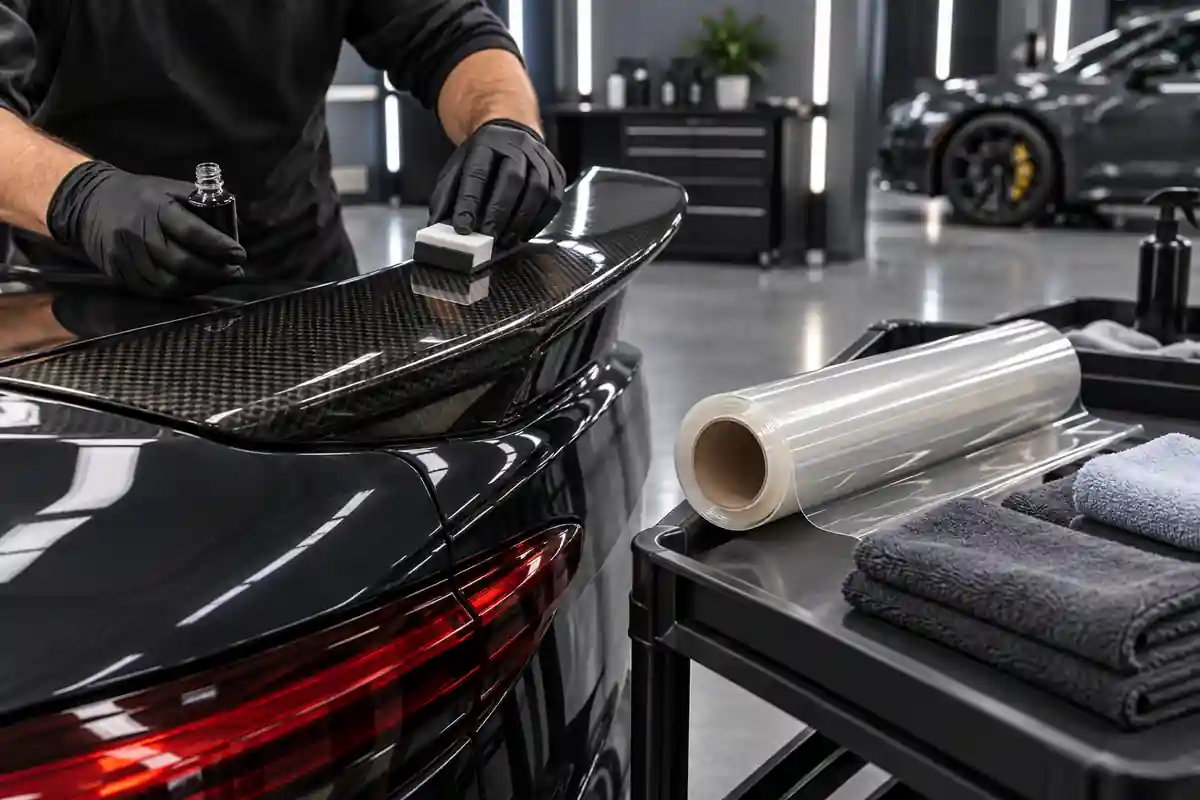
| Paint-protection film | Physical protection from light impacts and abrasion | Hoods, lips, mirror covers and leading edges | Edges, adhesive, installation and film compatibility require care |
Do not assume every coating provides meaningful UV protection simply because it is ceramic. Read the manufacturer’s documented claims and maintenance requirements. PPF may be particularly useful on a carbon-fiber hood or front lip because those surfaces receive direct impact, but complex edges should be installed by an experienced professional.
Can You Polish Carbon Fiber?
You can sometimes polish gloss clear-coated carbon fiber in the same controlled way as automotive paint, but the correct answer depends on surface type, coating thickness and defect depth. The carbon weave does not make an unsafe polishing process safe.
Before polishing:
- confirm the surface is clear-coated and not matte, raw, wrapped or PPF-covered;
- clean and decontaminate it fully;
- inspect for cracks, pinholes, exposed fibers and previous repair;
- measure coating thickness where valid equipment and substrate conditions permit;
- test the least aggressive method on a small area;
- control heat, pad cleanliness and edge pressure.
Deep scratches that catch a fingernail, cracked clear coat, resin damage and fiber fractures are not ordinary swirl correction. Stop and consult a composite repair or refinishing specialist.
Carbon Fiber Yellowing: What It May Mean
Yellowing is not one diagnosis. Possible causes include oxidation or discoloration of the outer clear coat, UV-related resin change, heat exposure, chemical staining, an aging protective film or a prior refinishing system. The correct remedy depends on which layer changed.
A light surface haze may be correctable if it is confined to a suitable clear coat. Discoloration beneath the coating will not be removed safely by polishing harder. Compare the affected part with a protected edge, inspect it under neutral light and obtain professional advice before sanding or refinishing.
Swirls, Cracks and Delamination: Know When to Stop
| Symptom | Possible level | Recommended response |
|---|---|---|
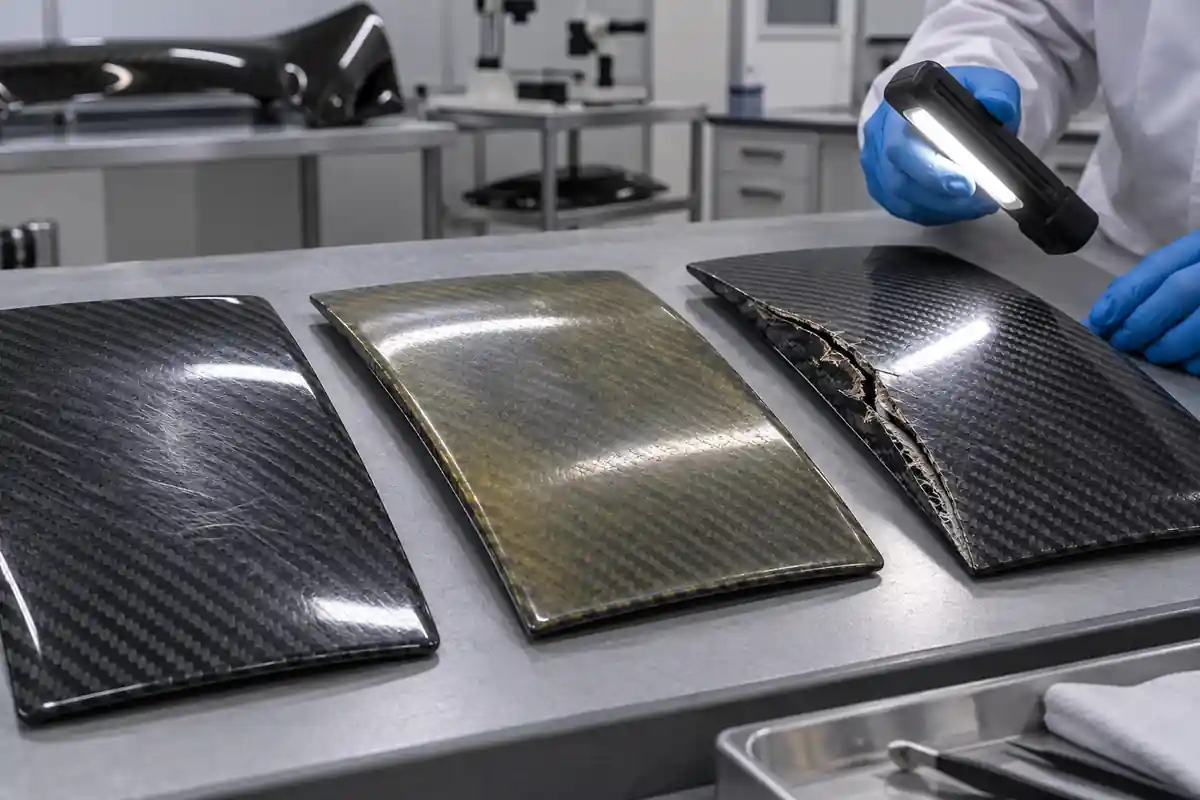
| Fine swirls visible in direct light | Usually outer-finish defect | Confirm finish; consider gentle professional correction |
| Uniform haze or loss of gloss | Contamination, oxidation or coating wear | Clean, test a small area and diagnose the affected layer |
| Yellow or brown tone | Coating, film, resin or heat-related change | Compare layers and seek refinishing advice before abrasion |
| White line after impact | Possible resin cracking or fiber damage | Stop loading the part and obtain composite inspection |
| Bulge, soft area or separation | Possible delamination or bond failure | Do not conceal it; remove from service if safety is uncertain |
| Frayed edge or exposed fiber | Open laminate | Avoid handling fibers bare-handed and seek repair guidance |
Exterior aero pieces can be exposed to meaningful road loads and impacts. If a front lip, splitter, side skirt or diffuser is cracked around a fastener, the problem is not only cosmetic. Inspect the mount, bracket and adjacent structure before driving at speed.
Care by Carbon Fiber Part Type
Carbon Fiber Hood
Horizontal exposure, heat cycling and stone impacts make the hood a high-priority inspection area. Keep drainage and washer components clear, inspect latch and hinge regions, and address film damage or chips before contamination enters the edge.
Front Lip and Splitter
Rinse grit before touching the surface. Inspect the underside, fasteners and leading edge after curb contact. A cracked mounting tab should not be treated as a detailing defect.
Side Skirts and Rear Diffuser
These lower parts collect tar, salt and road film. Use separate wash media and inspect hidden mounts. Confirm drainage paths remain open and do not allow aggressive chemicals to dwell in seams.
Spoilers and Mirror Covers
Check adhesive edges, bonded feet and tight curves where PPF or coating can collect residue. Avoid pulling towels across sharp edges.
Interior Carbon Trim
Interior parts face sunscreen, skin oil and cleaners rather than road grit. Use a lightly damp, soft cloth and a product appropriate for the finish. Avoid soaking switches, seams and bonded decorative overlays.
Engine-Bay Carbon Fiber
Allow the engine bay to cool. Avoid flooding connectors, sensors and filter media. Wipe the external surface of a carbon intake using its supplier’s instructions; filter cleaning is a separate maintenance procedure. See Noah’s carbon fiber cold air intake range for vehicle-specific applications.
How Often Should Carbon Fiber Be Maintained?
Use exposure and condition rather than an arbitrary mileage number. Inspect frequently when parts are exposed to intense sun, winter salt, coastal air, insects, track debris or outdoor storage. Wash when contamination is present, remove corrosive or organic residue promptly, and renew protection according to the selected product’s verified instructions.
A practical inspection routine includes:
- a quick visual check during every wash;
- fastener and bond-edge checks after installation and hard use;
- seasonal inspection before winter or periods of strong UV exposure;
- immediate inspection after an impact, scrape or unusual vibration;
- periodic review of coating or film condition.
B2B Storage, Packaging and After-Sales Guidance
Distributors and private-label brands can reduce damage claims by treating care instructions as part of the product specification. Noah Automotive supports wholesale and OEM/ODM carbon fiber auto body parts; the following controls help protect parts before and after sale.
- store long parts on supports that prevent sagging or point pressure;
- separate clear-coated surfaces with clean, non-abrasive material;
- protect corners and mounting tabs without placing adhesive directly on the finish;
- avoid prolonged direct sun and uncontrolled heat in storage;
- record finish type, approved cleaners and protection limitations;
- include an illustrated care card in the retail package;
- photograph the packed condition for high-value shipments;
- define cosmetic defects separately from transport or structural damage;
- provide a clear escalation path for cracks, delamination and fitment problems.
For a sourcing project, provide the intended vehicle, part type, finish, market, packaging standard and care-document requirements through Noah’s contact page.
Frequently Asked Questions
Can I wash carbon fiber with normal car shampoo?
Usually, if the part has a sound automotive clear coat and the shampoo is pH-neutral and finish-compatible. Check the supplier’s instructions first, especially for matte, resin-rich, repaired or PPF-covered parts.
Can I pressure-wash carbon fiber car parts?
A controlled rinse may be acceptable on a sound finish, but keep suitable distance and avoid concentrating pressure on edges, chips, cracks, film seams, decals, bonded joints and loose parts. Follow the equipment and part manufacturer’s limits.
Can you polish carbon fiber?
Gloss clear-coated carbon may sometimes be polished with a conservative paint-correction process. Do not polish matte carbon, exposed fibers, damaged laminate or PPF as though it were clear coat.
How do I keep carbon fiber from turning yellow?
Reduce UV exposure, remove contamination promptly and maintain a compatible protective system. Because yellowing can occur in different layers, inspect early rather than trying to correct advanced discoloration aggressively.
Is ceramic coating good for carbon fiber?
It can make sound, compatible surfaces easier to clean and more chemically resistant. It does not repair cracks, stop delamination or guarantee UV protection unless the specific coating documents that capability.
Should I use PPF on carbon fiber?
PPF can be useful on hoods, lips and other impact-prone areas. Film selection, surface preparation, edge design and installation quality matter, especially around complex curves and exposed edges.
What should I do if carbon fiber is cracked?
Stop treating it as a cosmetic detailing problem. Check whether the crack involves only the outer finish or extends into the laminate, mount or bonded joint. If structural integrity is uncertain, remove the part from service and obtain professional composite inspection.
Final Carbon Fiber Care Checklist
- Identify the surface before choosing chemicals or correction methods.
- Work in shade on a cool part.
- Rinse grit before touching the surface.
- Use clean, soft wash and drying media.
- Separate lower-body wash tools from upper panels.
- Remove bird droppings, insects, salt and sap promptly.
- Never polish matte finishes.
- Verify UV claims for coatings and films rather than assuming.
- Inspect mounts and edges, not only the visible weave.
- Escalate cracks, exposed fibers and delamination to a specialist.
Conclusion
Learning how to clean carbon fiber car parts begins with one principle: care for the actual outer finish, not the material name on the product listing. Gentle washing, prompt contaminant removal, compatible protection and regular inspection preserve appearance without hiding damage.
Gloss, matte, PPF-covered and resin-rich parts do not share one universal correction method. When a defect goes beyond the surface—especially near a mounting point—stop detailing and obtain a qualified inspection. That distinction protects both the value of the component and the safety of the vehicle.