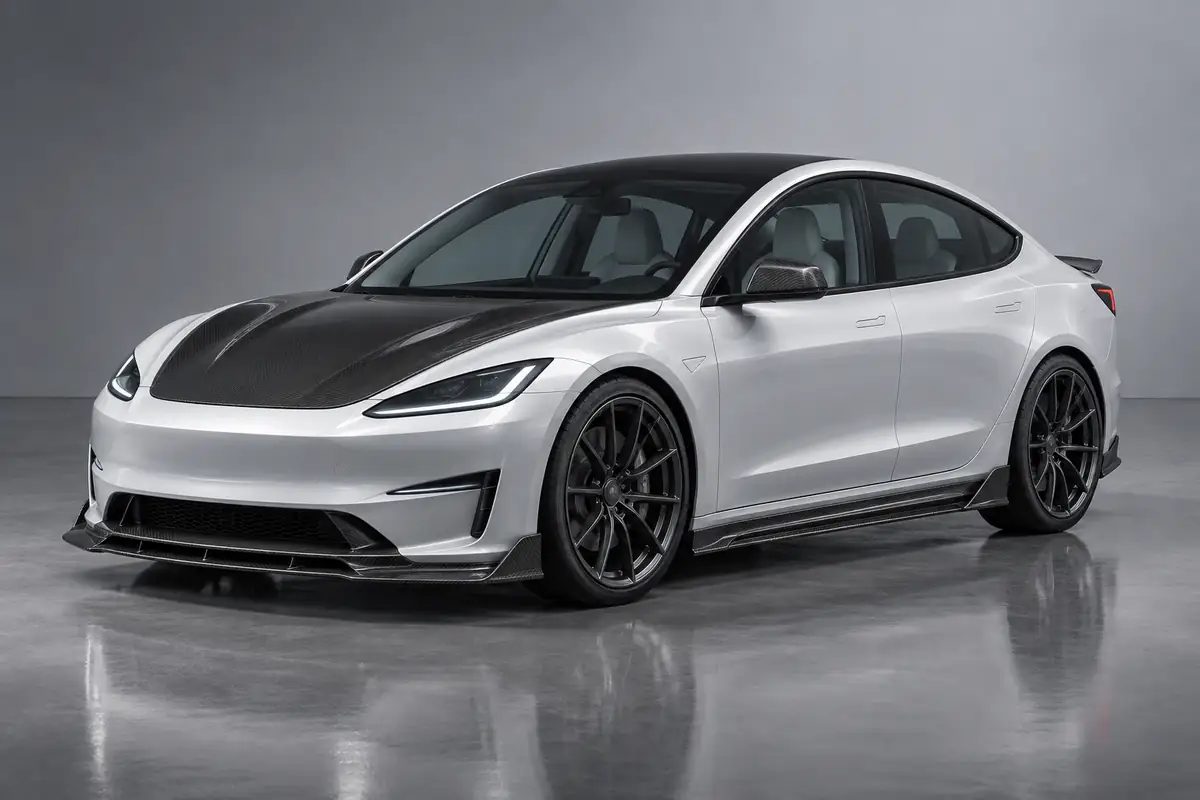
How Carbon Fiber Is Reshaping Automotive Lightweighting: This article will show you the vital role carbon fiber plays in modern automotive lightweighting. We will cover the core benefits of carbon fiber for automotive use and its common applications in modern vehicle manufacturing. Hope it will be helpful to you.
Carbon fiber has long been synonymous with million-dollar supercars — but a quiet transformation is underway. As electric vehicles face an escalating weight crisis, carbon fiber reinforced polymer (CFRP) is shifting from exotic racing material to an essential engineering solution for mass-market EVs. The data is clear: a 30–40% weight reduction in structural components translates directly into 6–8% more driving range. For an industry where every kilometer of range matters, that’s not incremental — it’s transformative.
This article examines why automakers are accelerating their adoption of carbon fiber Automotive Lightweighting, where it delivers the highest ROI, and what barriers still limit widespread use in production vehicles.
Why Carbon Fiber Matters for Electric Vehicles
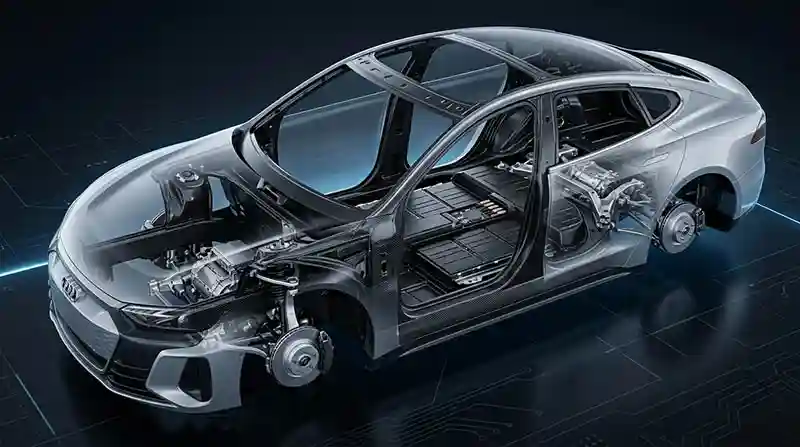
Electric vehicles carry a fundamental weight penalty. A typical lithium-ion battery pack weighs between 300 and 700 kg — often 30–40% of the vehicle’s total mass. Every kilogram added elsewhere compresses range, increases braking distance, and accelerates tire wear. The industry response has been two-pronged: push battery energy density higher, and strip weight from everywhere else. This growing focus on automotive lightweighting has made carbon fiber one of the most promising materials for reducing vehicle mass without sacrificing structural performance.
The physics are straightforward. CFRP has a density of approximately 1.6 g/cm³ — roughly one-quarter the density of steel and two-thirds that of aluminum. Yet its tensile strength can exceed 3,500 MPa, several times that of structural steel. When engineered correctly, carbon fiber components can deliver equivalent or superior strength at significantly lower weight than their metal counterparts, making CFRP particularly valuable for automotive lightweighting applications in electric vehicles.
The Weight-Range Equation: What the Numbers Show
Industry research consistently demonstrates a strong correlation between vehicle mass and energy consumption. The U.S. Department of Energy’s vehicle lightweighting studies estimate that a 10% reduction in vehicle weight yields approximately 6–8% improvement in electric range. For a vehicle rated at 400 km, that’s 24–32 kilometers — enough to eliminate range anxiety for the majority of daily commutes.
Beyond range, weight reduction delivers compounding benefits across multiple performance dimensions:
- Braking performance: Lower unsprung and total mass reduces braking distances and wear on brake components
- Handling and agility: Reduced mass improves cornering responsiveness and ride quality, particularly when applied to low-moment components like suspension arms and drive shafts
- Tire wear: Lighter vehicles place less stress on tires, extending their service life
- Component durability: Reduced structural loads extend the fatigue life of suspension, chassis, and powertrain components
Where Carbon Fiber Is Making the Biggest Impact in EVs
Battery Pack Enclosures: The Highest-Volume Opportunity
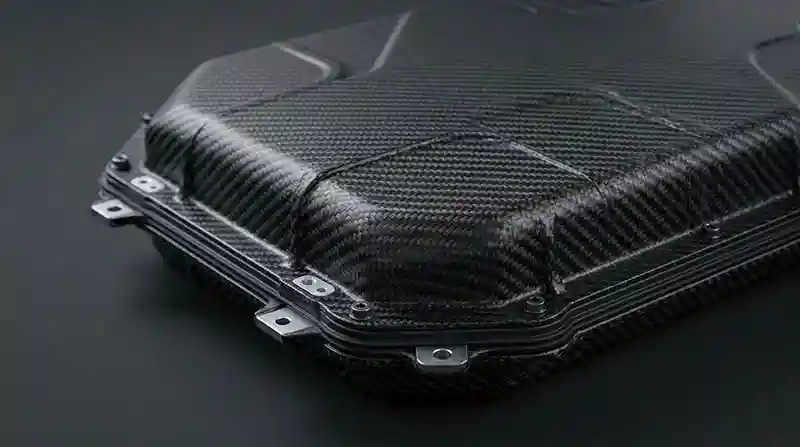
The battery pack enclosure — including the top cover, side panels, and underbody shield — represents the single largest volume application for carbon fiber in electric vehicles today. These components are structural, safety-critical, and ideal candidates for CFRP because they demand high stiffness, impact resistance, and corrosion immunity.
Carbon fiber battery covers typically achieve 40–60% weight savings compared to stamped aluminum equivalents, while providing superior damage resistance against road debris and off-road impacts. Several major manufacturers have already qualified carbon fiber battery enclosures for production vehicles, and the segment is projected to grow at a compound annual rate exceeding 15% through 2030 as material costs continue to decline.
Monoque and Cabin Structures
The carbon fiber monoque — a single-piece integrated cabin structure — remains the gold standard of automotive lightweighting. Originally popularized by McLaren and now adopted by brands like Porsche (918 Spyder), Mercedes-AMG (One), and Chinese manufacturer YangWang (U9), this approach eliminates the traditional body-in-white entirely. A carbon fiber monoque can weigh 40% less than an equivalent aluminum structure while delivering significantly higher torsional rigidity.
While full monoque construction remains economically viable primarily for high-volume premium segments, modular carbon fiber cabin inserts are beginning to appear in mid-range performance EVs, offering a cost-effective pathway to lightweighting benefits without full structural redesign.
Chassis and Suspension Components
Unsprung mass — the weight of components not supported by the suspension — has an outsized effect on vehicle dynamics. Reducing unsprung weight by 1 kg produces the same handling benefit as reducing sprung weight by 10 kg. This makes carbon fiber suspension components particularly valuable:
- Carbon fiber control arms reduce unsprung weight by 40–50% compared to cast aluminum alternatives
- Carbon fiber drive shafts combine low rotational mass with high torsional stiffness, improving power delivery response
- Carbon fiber leaf springs are seeing renewed interest in commercial EV applications where payload efficiency is critical

Exterior Body Panels
Hoods, trunk lids, fenders, and roof panels are the most visible carbon fiber applications. Beyond weight savings, these panels offer design flexibility that stamped metal cannot match — complex aerodynamic contours can be molded directly into the composite, eliminating the need for additional aerodynamic add-ons.
Material Advantages Beyond Weight
Impact Energy Absorption
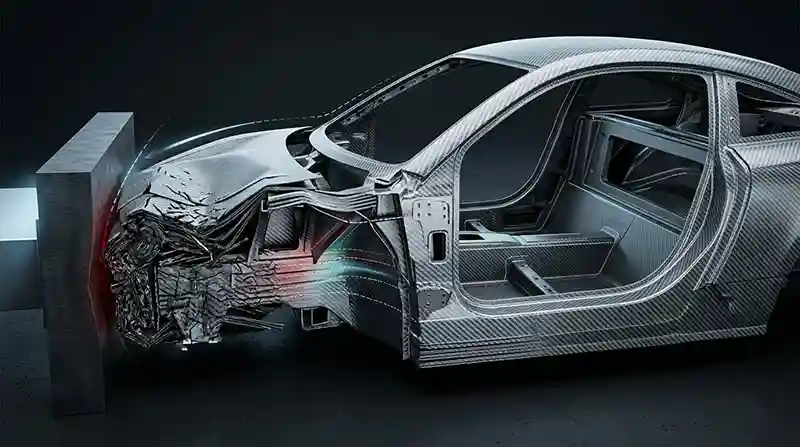
One of carbon fiber’s underappreciated advantages is its crash energy management. Unlike steel, which deforms plastically, CFRP absorbs impact energy through controlled fiber breakage and matrix cracking. This mechanism can absorb 2–3 times more energy per unit mass than aluminum in controlled tests, making carbon fiber particularly suitable for crash structure applications where occupant protection is paramount.
Corrosion and Fatigue Resistance
Carbon fiber composites do not corrode, rust, or suffer from galvanic degradation in the way that steel and aluminum structures do. For underbody components exposed to road salts, moisture, and temperature cycling, this translates to longer service life and reduced maintenance — a significant advantage for commercial vehicle operators and fleet managers who calculate total cost of ownership over 100,000+ kilometer service intervals.
Design Integration
Composite manufacturing enables part consolidation — multiple stamped and welded metal components can be replaced with a single molded CFRP part. This reduces assembly complexity, eliminates fastener points that become failure origins, and opens design possibilities that are impossible with conventional metal forming processes.
The Chinese Manufacturing Revolution: Why Costs Are Falling
The single most important trend in automotive carbon fiber today is the surge in Chinese large-tow carbon fiber production. Companies including Zhejiang Wanxing, Guangwei Composites, and Zhongfu Shenying have dramatically expanded capacity for 24K and 48K large-tow fiber — the grades used in automotive structural applications where absolute maximum strength is less critical than cost-effective performance.
This capacity expansion has pushed raw carbon fiber prices down significantly over the past three years. While exact pricing varies by specification and volume, industry estimates suggest that automotive-grade large-tow carbon fiber has become 30–50% more affordable since 2022, with further declines projected as new production lines come online through 2027.
Lower material costs are enabling a broader range of vehicle segments to consider carbon fiber. What was once viable only for limited-production hypercars is now being evaluated for volume production SUVs and sedans — precisely the segment where weight reduction delivers the most commercially impactful range gains.
Limitations and Ongoing Challenges
Despite rapid progress, carbon fiber has not yet displaced aluminum or steel in mainstream automotive applications. Understanding the remaining barriers is essential for realistic planning:
Manufacturing Speed
Traditional autoclave curing cycles for structural carbon fiber parts can range from 4 to 12 hours — far slower than the 60–90 second cycle times achievable with metal stamping. While out-of-autoclave (OoA) processes, resin transfer molding (RTM), and thermoplastic composite technologies are narrowing this gap, cycle time remains a significant constraint for high-volume production.
Repair and Aftermarket Complexity
Carbon fiber components cannot be repaired using conventional bodyshop techniques. Impact damage that would require only dent removal on a steel panel often necessitates full component replacement in CFRP, as internal delamination is invisible from the surface. This creates challenges for insurance models and repair networks that are still adapting to composite vehicle architectures.
Recyclability
Thermoset carbon fiber composites — the dominant material in automotive applications — are inherently difficult to recycle. Pyrolysis and solvolysis recovery processes exist but are not yet deployed at automotive production scale. Thermoplastic composites offer a recyclable alternative, but their mechanical properties and processing characteristics differ from thermoset systems, requiring separate qualification for safety-critical applications.
Looking Ahead: The Path to Volume Production
The trajectory is clear. Carbon fiber in automotive applications is transitioning from a performance luxury to an engineering necessity — driven not by aesthetic desire but by the physics of electric vehicle efficiency. As large-tow fiber costs continue to decline, manufacturing cycle times improve, and design standards mature, we can expect to see carbon fiber appear in increasingly mainstream vehicle segments over the next five to ten years.
For fleet operators, OEM engineers, and procurement professionals evaluating carbon fiber solutions, the key question is no longer whether this material has a role in electric vehicle lightweighting — it’s which applications deliver the strongest return on investment given your specific weight targets, production volumes, and cost constraints.
At Noah Automotive, we specialize in carbon fiber solutions for the automotive and mobility sectors. With over 14 years of manufacturing experience and full OEM/ODM capabilities across compression molding, autoclave curing, and CNC finishing, we help clients navigate the trade-offs between performance, cost, and production scale — from prototype through volume manufacturing.
Whether you’re developing battery enclosures, structural body panels, or suspension components, our engineering team can evaluate the optimal carbon fiber solution for your application. Contact us to discuss your project requirements.

Frequently Asked Questions
How much weight can carbon fiber save in an electric vehicle?
Carbon fiber components typically achieve 30–40% weight savings compared to equivalent steel parts and 20–30% savings versus aluminum. In battery pack enclosures, reductions of 40–60% are commonly reported. The cumulative effect across multiple components — hood, trunk, battery cover, suspension arms — can reduce a vehicle’s overall mass by 50–100 kg in a mid-size EV platform.
Is carbon fiber safe for crash structures in production vehicles?
Yes. CFRP absorbs impact energy through controlled fiber breakage and matrix cracking, achieving 2–3× the specific energy absorption of aluminum in comparable geometries. Major manufacturers including BMW (i3/i8), McLaren, and Porsche have validated carbon fiber crash structures for production vehicles. The key design principle is directing crash forces through load paths that utilize the material’s strength in tension rather than relying on plastic deformation.
Why hasn’t every EV manufacturer switched to carbon fiber?
The primary barriers are manufacturing cost and cycle time. While raw material costs have declined significantly, producing complex structural components at the throughput required for mass-market vehicles remains challenging. Additionally, the automotive industry has decades of tooling, supply chain, and repair infrastructure built around metal fabrication — transitioning to composites requires parallel investment in new capabilities.
What is the difference between dry carbon and prepreg carbon fiber for automotive use?
Dry carbon (vacuum infusion) uses dry fiber fabric combined with injected resin, offering faster cycle times and lower tooling costs — ideal for aesthetic body panels and medium-volume applications. Prepreg (pre-impregnated fiber cured in an autoclave) delivers higher fiber-to-resin ratios, greater strength, and more consistent thickness — preferred for structural and safety-critical components. Both approaches are used in automotive applications depending on the performance and cost requirements of each part.
How do carbon fiber prices compare to aluminum and steel for automotive parts?
Carbon fiber raw material costs remain 3–5× higher than aluminum and 8–12× higher than steel on a per-kilogram basis. However, when evaluated on a per-part-performance basis — accounting for the reduced component count, eliminated fasteners, and longer service life — the total cost advantage narrows considerably. For weight-sensitive applications where range extension directly translates to market competitiveness, carbon fiber often delivers a compelling value proposition even at current price levels.
Explore Carbon Fiber Solutions for Automotive Lightweighting
Looking for a reliable manufacturing partner for your next Automotive Lightweighting project? Noah Automotive provides OEM/ODM carbon fiber solutions for EVs, performance vehicles, and other weight-sensitive automotive applications.
From carbon fiber battery enclosures and structural body panels to hoods, suspension components, and aerodynamic parts, our engineering and manufacturing teams can help you select the right material, process, and production method for your specific requirements. With capabilities including compression molding, autoclave curing, CNC machining, and other composite manufacturing processes, we support projects from prototype development through volume production.
Tell us about your application, target weight reduction, material requirements, and expected production volume. Our team can evaluate the project and recommend a practical carbon fiber solution for your Automotive Lightweighting goals.
Contact Noah Automotive today to discuss your project and request a quotation.