Short answer: a well-engineered, vehicle-specific cold air intake can reduce inlet restriction, improve induction sound and sometimes add measurable power. It is not a universal horsepower guarantee. The result depends on the factory airbox, engine calibration, intake-air temperature, sensor placement, vehicle modifications and the quality of the test.
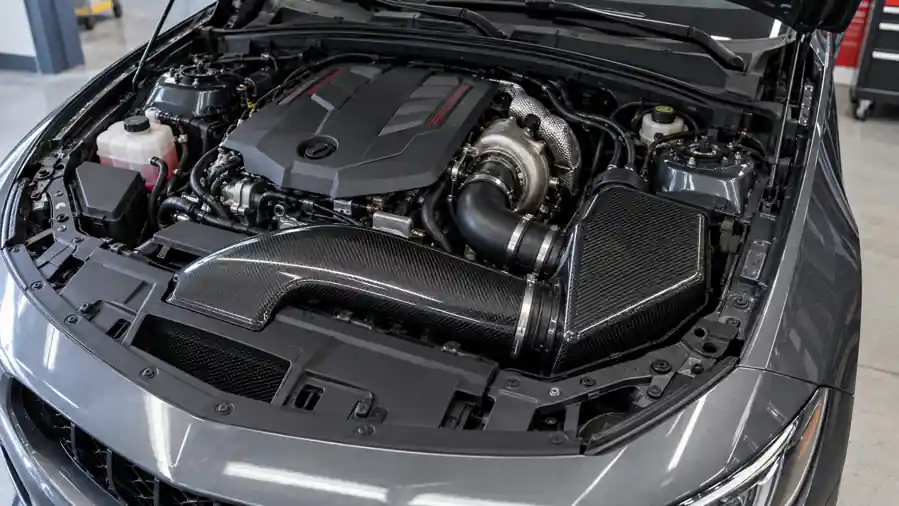
This guide separates the useful engineering from the marketing. It explains where an intake can help, why some systems show little benefit, how heat soak and tuning change the result, and what buyers should verify before choosing a kit.
Do Cold Air Intakes Really Work?
Yes—when “work” is defined precisely. An aftermarket intake may work by reducing pressure loss before the throttle body or turbocharger, by drawing air from a cooler location, or by doing both. It may also make induction and turbo sounds more audible. Those are different outcomes, and a system that produces more sound does not automatically produce more power.
Modern factory intake systems are not simply restrictive boxes. They are developed around filtration, noise, packaging, water management, emissions, service life and drivability. Some have meaningful restriction at higher airflow; others already supply the stock engine adequately. The right comparison is therefore not “aftermarket versus bad factory design,” but the measured performance of two complete systems on the same vehicle.
What changes when restriction is reduced?
An engine must pull air through the inlet, filter, airbox and ducting. Every filter surface, abrupt bend and undersized section can create pressure loss. Reducing that loss can help a naturally aspirated engine fill its cylinders or let a turbocharger reach its airflow target with less work. The benefit becomes more relevant as airflow demand rises through higher engine speed, tuning or a larger turbo.
What changes when intake air is cooler?
Cooler air is denser than warmer air at the same pressure. However, the temperature that matters is the air reaching the engine under real operating conditions—not the temperature of a carbon tube in a product photo. Air source, enclosure sealing, vehicle speed, engine-bay temperature and intercooling all influence the final result.
Where the Real-World Benefits Come From
| Possible benefit | When it is most credible | What to verify |
|---|---|---|
| Lower inlet restriction | The factory system becomes restrictive at the tested airflow | Pressure-drop or flow-bench data at comparable test conditions |
| More power or torque | The ECU can use the additional airflow and the test is repeatable | Same vehicle, fuel, correction method and multiple baseline/final runs |
| More consistent performance | A sealed system isolates the filter from hot engine-bay air | Intake-air temperature during repeated runs, not one cold pull |
| Sharper sound and response | The factory resonators and sound suppression are removed | Whether the buyer wants extra sound during daily driving |
| Support for later modifications | A tune or turbo upgrade raises airflow demand | Tube diameter, sensor scaling and tested power range |
Published performance claims should be attached to an exact vehicle, engine, configuration and test method. A result from one turbocharged platform should not be presented as a guaranteed result for another.
Cold Air Intake vs Stock Airbox
A factory airbox often has three strengths: it is sealed from much of the engine-bay heat, it has reliable water separation, and its airflow around the mass-airflow sensor is calibrated for stable drivability. Its potential weaknesses are a small filter, narrow ducting, corrugated sections or packaging compromises designed around noise and production cost.
A good aftermarket system preserves the factory system’s protections while improving the limiting section. A poor one may replace a well-sealed factory box with an exposed cone filter that inhales warmer air at idle and low road speed. That product may sound faster while producing no repeatable improvement.
When keeping the stock airbox may be sensible
- The vehicle is stock and independent data shows little inlet restriction.
- Quiet operation, deep-water protection or an OEM appearance is the priority.
- The available kit relocates the filter without a proper cold-air feed or enclosure.
- Local emissions, warranty or inspection requirements are uncertain.
When an aftermarket intake is more likely to help
- The engine or turbo is operating at higher airflow than the factory calibration.
- Testing identifies a pressure drop in the factory inlet path.
- The replacement uses a larger filter, smooth transitions and appropriate cross-sectional area.
- The airbox seals to a cool external-air source and retains correct sensor behavior.
Open vs Sealed Cold Air Intake

| Factor | Open-element intake | Sealed intake |
|---|---|---|
| Induction sound | Usually louder | Usually more subdued |
| Engine-bay heat exposure | Higher unless the heat shield seals effectively | Generally lower with a proper external-air duct |
| Filter access | Simple to inspect and service | May require opening the housing |
| Weather and debris protection | Depends heavily on filter location | Usually better when correctly designed |
| Best fit | Sound-focused builds and platforms proven to tolerate the layout | Daily driving, repeated performance use and hot engine bays |
Neither format wins automatically. The best design is the one validated on the vehicle. For example, a well-ducted open system can outperform a badly shaped sealed box, while a sealed box can deliver more repeatable temperatures during traffic and repeated pulls.
Heat Soak: Why the First Dyno Run Can Mislead
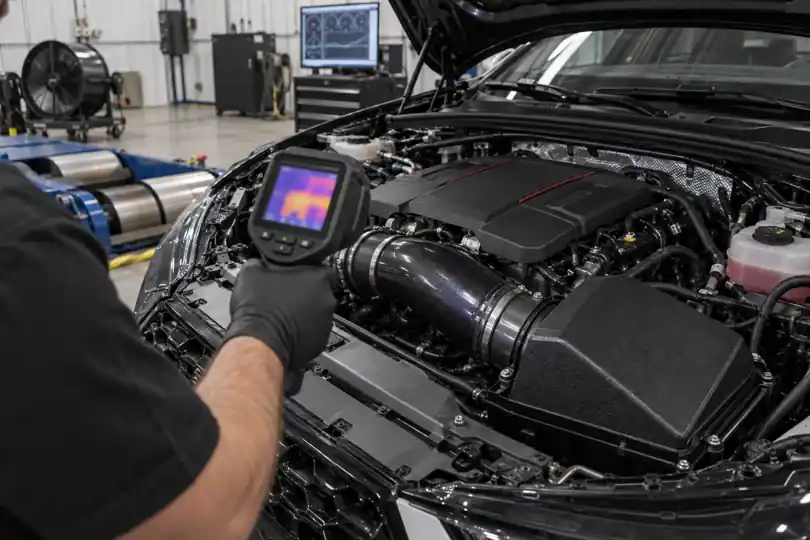
Heat soak is the rise in component and intake-air temperature after the engine, radiator, turbocharger and surrounding hardware have warmed the engine bay. An exposed filter may perform well on an initial pull with the hood open and a large fan, then ingest hotter air during traffic or repeated acceleration.
To evaluate heat soak, compare intake-air temperature against ambient temperature over time. Test idle, steady road speed and repeated acceleration. Record vehicle speed and coolant temperature, and keep the hood position consistent. A single infrared surface reading is useful for diagnosis, but ECU-logged air temperature is more relevant to the air the engine actually receives.
On turbocharged vehicles, the compressor heats the air and the intercooler removes part of that heat. This does not make pre-compressor temperature or inlet restriction irrelevant: compressor operating conditions and the intercooler’s remaining thermal capacity still matter. It does mean simplistic claims such as “colder tube equals a fixed horsepower gain” should be treated cautiously.
Does a Cold Air Intake Need a Tune?
Some vehicle-specific intakes are designed to work on the factory calibration; others require ECU calibration. Follow the kit manufacturer’s instructions for the exact engine and model year.
A tune is less likely to be required when:
- The intake retains the original sensor housing geometry and sensor position.
- The manufacturer validated fuel trims, air-fuel ratio and diagnostic behavior on the stock calibration.
- The change stays within the ECU’s expected airflow measurement range.
A tune or calibration review becomes more important when:
- The MAF housing diameter or airflow profile changes substantially.
- The vehicle has a larger turbo, higher boost or other airflow modifications.
- Fuel trims, air-fuel ratio or diagnostic trouble codes move outside acceptable limits.
- The supplier explicitly labels the intake as tune-required.
Do not assume a tune can correct a leaking coupler, turbulent sensor placement or an incorrectly sized pipe. Hardware fitment and sensor integrity come first.
Naturally Aspirated vs Turbocharged Engines
Naturally aspirated engines
Because atmospheric pressure fills the cylinders, lowering inlet restriction can be useful. The achievable gain is still limited by the entire engine system, including the throttle body, intake manifold, cam timing and exhaust. On an otherwise stock engine with an efficient factory box, sound may be the most noticeable change.
Turbocharged engines
The intake sits upstream of the compressor. A less restrictive inlet may reduce the pressure ratio the compressor must produce for a given manifold target, particularly at higher airflow. Benefits may become clearer after software or turbo upgrades, but data must still confirm them. Check compatibility with turbo inlets, crankcase-breather connections and any recirculation hoses.
Carbon Fiber, Plastic or Aluminum Intake?
Material alone does not determine performance. Geometry, air source, sealing, filter sizing and sensor design matter more.
- Carbon fiber composite: lightweight, visually premium and relatively resistant to rapid heat conduction. Quality depends on laminate design, resin system, cure process and surface protection.
- Molded plastic: thermally insulating, durable and capable of complex smooth shapes. It is often an excellent engineering choice even if it appears less exotic.
- Aluminum: strong, economical and easy to fabricate, but readily conducts heat from the engine bay. Air residence time is short while driving, so installation and shielding should be evaluated rather than judging by material alone.
Readers interested in how composites are used across the vehicle can also review Noah’s guide to automotive carbon fiber.
How to Read Dyno and Flow Claims
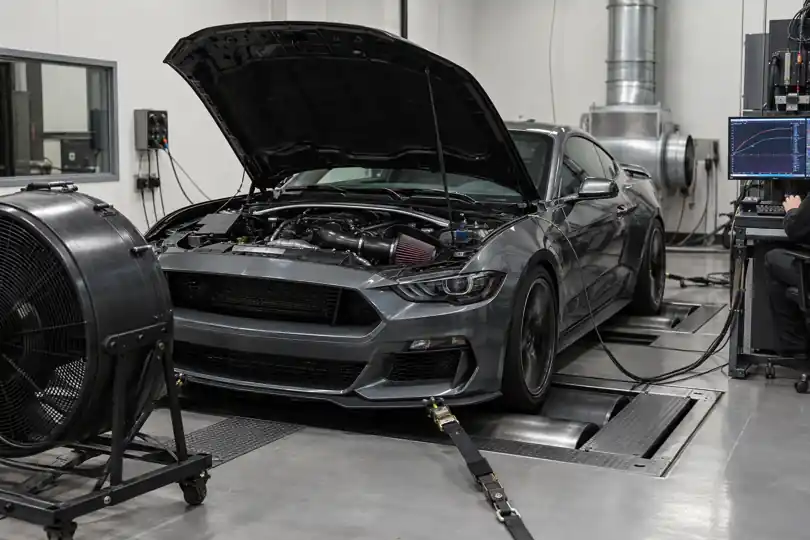
A credible comparison controls as many variables as practical. K&N’s published intake comparison methodology describes airflow and vehicle testing, while aFe explains why its dyno process uses baselines, repeated runs and real-world validation. These are useful principles even when evaluating a different brand.
Ask for the following:
- Same vehicle, fuel, tires, gear and dyno configuration before and after.
- Ambient conditions and the correction standard used.
- Multiple repeatable runs rather than the best single result.
- The full torque and power curves, not only peak numbers.
- Intake-air temperature, coolant temperature and adequate stabilization.
- Disclosure of ECU calibration and all other vehicle modifications.
A flow-bench result shows restriction at specified conditions; it does not by itself prove a horsepower gain. A chassis dyno measures wheel output in a controlled setting; it does not reproduce every road-speed airflow and weather condition. Strong evidence uses both engineering measurements and real-world validation.
Filter Type, Maintenance and Water Risk
Dry synthetic and oiled cotton filters can both work when correctly sized and maintained. Dry filters simplify servicing and avoid accidental over-oiling. Oiled media may offer high airflow and dust capacity, but excess oil or incorrect cleaning can cause problems on some sensor arrangements. Follow the filter manufacturer’s procedure instead of using a universal service interval.
Filter location matters. A low-mounted filter may access cooler air but can face splash or water-ingestion risk. No intake makes deep-water driving safe. Inspect the routing, drainage and weather protection for the intended market.
Cold Air Intake Buying Checklist
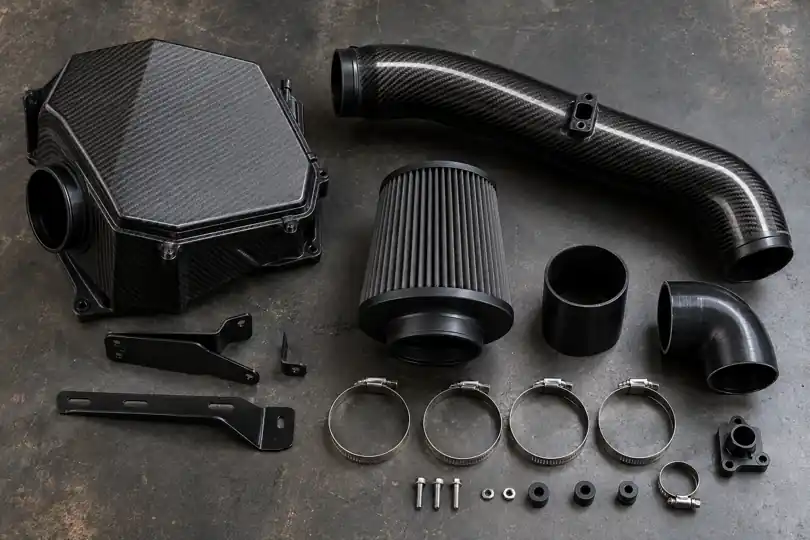
- Fitment: confirm year, make, model, engine code, body style, drivetrain and destination market.
- Air source: identify where the filter receives outside air and how the box seals.
- Geometry: look for smooth transitions, adequate tube area and minimal abrupt steps.
- Sensors: verify MAF/MAP provisions, orientation and stock-tune compatibility.
- Connections: confirm breather, vacuum and recirculation fittings.
- Evidence: request pressure-drop, temperature, dyno or road-validation data for the exact application.
- Contents: check filters, couplers, clamps, brackets, hardware and instructions.
- Service: confirm filter access, cleaning method and replacement availability.
- Compliance: verify emissions, noise and inspection requirements in the installation location.
In the United States, modifications must not defeat emissions controls. The EPA’s vehicle and engine tampering policy explains the federal framework. Requirements differ by jurisdiction, so buyers and installers should verify the rules that apply to the exact vehicle and market.
Which Type Should You Choose?
| Your priority | Starting point | Key proof to request |
|---|---|---|
| Daily driving and consistency | Sealed, vehicle-specific system using the factory cold-air feed | Repeated temperature and drivability validation |
| Maximum induction sound | Open-element system with an effective heat shield | Hot-engine testing and secure filter placement |
| Stock vehicle, no tune | System explicitly validated for the factory calibration | Fuel-trim, AFR and diagnostic testing |
| Tuned or larger-turbo build | Higher-flow system matched to the power goal | Pressure-drop data and tuner compatibility |
| Premium engine-bay finish | Prepreg carbon fiber system with documented fitment | Material, cure process, UV finish and sample inspection |
| Wholesale or private label | Supplier with engineering, tooling and batch controls | Approved sample, inspection standard and traceable specification |
What B2B Buyers Should Validate Before a Bulk Order
Distributors and private-label brands carry more risk than a one-time retail buyer. Validate a production-representative sample on the exact vehicle before approving volume production. Record the engine code, sensor housing dimensions, coupler specification, bracket position, filter model and hardware list. Inspect carbon weave alignment, laminate edges, surface finish, dimensional repeatability and mounting loads.
The approved sample should become the reference for incoming inspection. Packaging also matters: carbon housings and ducts need support that prevents abrasion and point loading during export. Branding, installation instructions and claims should match the evidence available for each application.
Noah Automotive develops and supplies custom carbon fiber cold air intake systems for distributors, performance brands and OEM/ODM programs. Buyers can also review vehicle-specific examples such as the 370Z VQ37 intake, Honda Civic 1.5T intake and BMW B58 intake. Fitment and performance claims must be confirmed for the exact application.
Final Verdict
Cold air intakes can work, but the useful question is not whether every intake adds power. Ask whether a specific design reduces a measured restriction, controls temperature under the intended driving conditions, preserves sensor behavior and has repeatable evidence on the exact vehicle.
For a stock daily driver, a sealed vehicle-specific system with documented factory-calibration compatibility is usually the lowest-risk choice. For tuned or higher-flow builds, pressure drop and compatibility with the complete hardware-and-software combination become more important. If a seller provides only a peak horsepower number without conditions, curves or repeat runs, treat it as marketing rather than proof.
Frequently Asked Questions
How much horsepower does a cold air intake add?
There is no universal number. Results depend on the vehicle, factory restriction, calibration, temperature and other modifications. Use repeatable before-and-after data for the exact application.
Can a cold air intake damage an engine?
A correctly designed and installed system should not damage the engine. Risks include poor filtration, loose hardware, air leaks, incorrect sensor geometry and water ingestion from an unsuitable low filter position.
Is a sealed intake better than an open intake?
A sealed system usually offers better isolation from engine-bay heat and debris, while an open system is typically louder and easier to inspect. Vehicle-specific testing should decide which performs better.
Will an intake cause a check-engine light?
It can if sensor scaling, airflow around the MAF, a hose connection or installation is incorrect. Choose a system validated for the exact vehicle and follow its tune requirements.
Does carbon fiber make an intake faster?
Carbon fiber can reduce weight, limit rapid heat conduction and provide a premium finish, but material alone does not create power. Airbox sealing, geometry, filter area and testing are more important.
Should I install an intake before an ECU tune?
That depends on the platform and the tuner’s requirements. Some systems work on the stock calibration; others are designed as part of a tuned package. Confirm the planned hardware combination before purchasing.