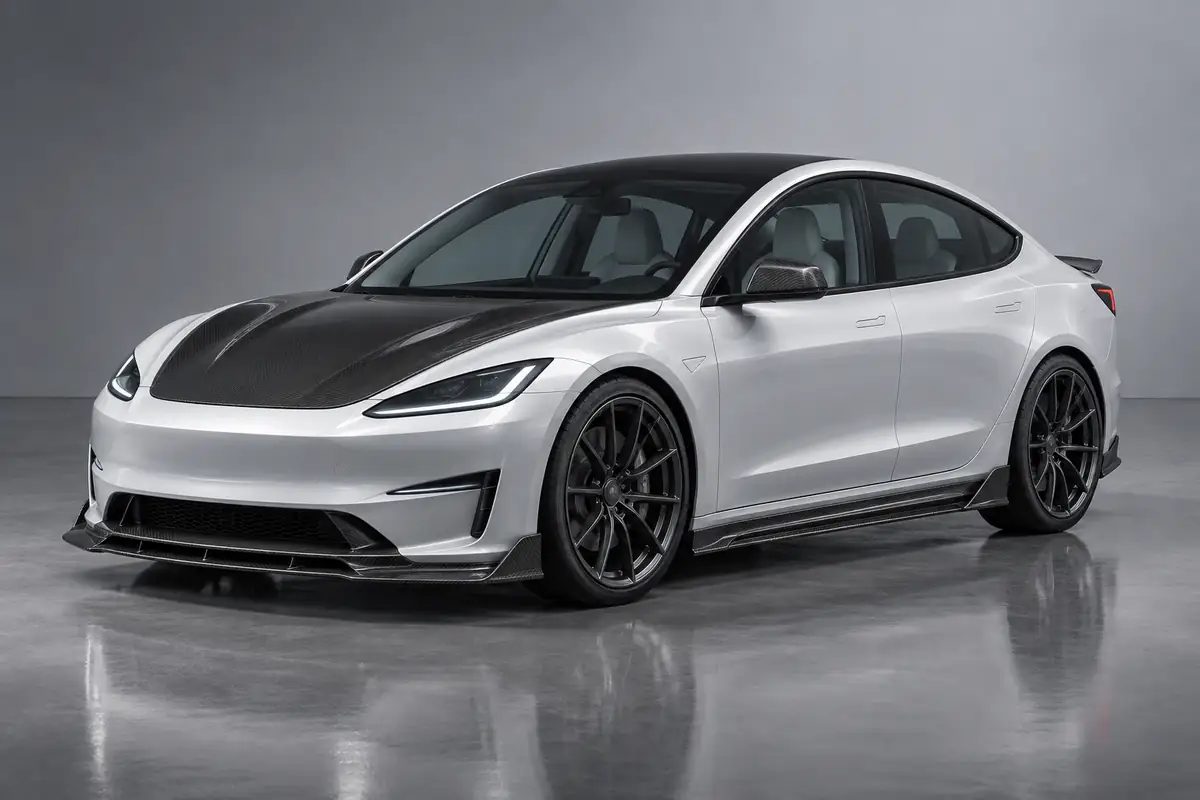
The Tesla Model 3 changed everything. When it first rolled off the production line in 2017, it was supposed to be the electric car for the masses — a $35,000 sedan that could outperform sports cars while emitting zero tailpipe emissions. Eight years and countless revisions later, the Model 3 remains the benchmark against which every other electric sedan is measured. This is the complete story of its evolution.
In this article, we will explore the evolution of the Tesla Model 3 through each major generation and update, from its 2017 inception to the 2025 Highland refresh. Each phase represents a significant step forward in terms of performance, technology, and design. Join us as we take a journey through the history of the Tesla Model 3 and discover how it has consistently redefined the expectations for electric vehicles.
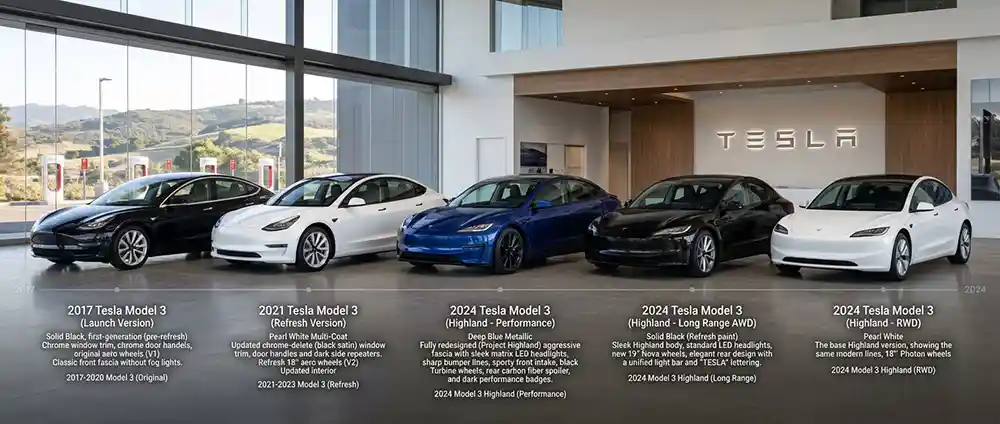
2017: The First Delivery — A Promise Promised
Production began at Tesla’s Fremont factory in late 2016, but the first customer deliveries didn’t happen until July 28, 2017. The initial Model 3 came in one trim: the Long Range Rear-Wheel Drive. It featured a 75 kWh battery pack, 310 miles of EPA range, and a 0–60 mph time of 5.1 seconds. The design was immediately recognizable — sharp lines, a frameless windshield, and that iconic Tesla minimalism inside with a single 15-inch portrait touchscreen dominating the dashboard.
What made the 2017 Model 3 revolutionary wasn’t just its specs. It was the price point. At $35,000 before incentives, it undercut every competitor by thousands while delivering significantly more range. The German engineering trifecta — BMW 3 Series, Mercedes C-Class, Audi A4 — all fell behind on both range and acceleration. Tesla had pulled off what industry experts said was impossible: a mass-market electric vehicle that didn’t feel like a compromise.

2018: Long Range AWD and the Performance Variant
Tesla expanded the lineup quickly. The Long Range AWD arrived in early 2018 with a dual-motor setup producing 346 horsepower and 389 lb-ft of torque. The combined weight of two electric motors pushed 0–60 mph to 4.5 seconds, and the EPA range climbed to 310 miles — matching the RWD version despite the extra weight. That symmetry wasn’t an accident; it was a testament to Tesla’s battery efficiency engineering.
The real headline was the Performance model, arriving in September 2018. With 450 horsepower, a 0–60 time of 3.2 seconds, and an electronically governed top speed of 163 mph, it was the fastest accelerating sedan available to the public at under $70,000. The Performance variant added reinforced suspension, larger brakes, carbon fiber spoiler, and those distinctive 20-inch Überturbine wheels that became instantly iconic.
This was also the year Tesla introduced over-the-air software updates as a defining feature. The Model 3 could improve while you slept — adding features, fixing bugs, and occasionally surprising owners with unexpected capabilities. It fundamentally changed how consumers thought about car ownership.
2019: The Price War That Shook the Industry
In February 2019, Tesla slashed the Model 3 2019 price from $44,990 to $35,000 — a $9,990 reduction that sent shockwaves through the automotive industry. Competitors scrambled. GM fast-tracked the Chevrolet Bolt EV refresh. Ford accelerated the Mustang Mach-E. But Tesla had a structural advantage: vertical integration and the economies of scale from massive production volumes at Fremont and the emerging Shanghai Gigafactory.
The 2019 refresh also brought meaningful hardware updates. The interior received improved materials — softer touchpoints, better stitching, and the removal of the glossy black piano trim that scratched too easily. Exterior colors were refreshed, and the Highland-style headlights (then called “New Look”) were introduced on the Performance model, giving it a more aggressive front fascia with new LED signatures.
Range gained ground too. The Long Range AWD now achieved 322 miles EPA, making it the first mass-market electric vehicle to break the 300-mile barrier consistently. The Performance model also tracked at 315 miles. These numbers weren’t just marketing — they addressed the single biggest anxiety of EV buyers: range uncertainty on road trips.
2020: Shanghai Production and the Volume Revolution
Giga Shanghai opened in late 2019, but 2020 was when it truly proved itself. The Chinese factory produced Model 3s at a rate that Fremont couldn’t match, with build quality that many reviewers actually rated higher than the California plant. For the first time, Tesla could supply both the North American and Asian markets without cross-continental shipping delays.
The 2020 Model 3 Long Range AWD gained a significant range bump to 353 miles EPA — a 31-mile improvement over the previous year. This came from more efficient battery cells, improved motor design, and aerodynamic tweaks. The Performance model also improved to 315 miles, though some reviewers noted the real-world highway range was closer to 280–290 miles at 75 mph cruise speeds.
Autopilot capabilities expanded throughout 2020 with software versions 2020.8 through 2020.11. Navigate on Autopilot could now automatically take exits, merge into traffic, and adjust speed for curves — features that felt like science fiction just two years prior. Hardware 3 computers became standard, providing 7x the processing power of the original HW2.5 units.
2021: Software-First Engineering at Scale
The 2021 model year brought what many owners considered the most impactful software update in Model 3 history: version 2021.4. It introduced several highly requested features including native Spotify integration, wireless phone charging improvements, rear camera display in mirrors, and enhanced Autopilot visualizations. The cabin heater could now be controlled remotely via the app, a feature that proved invaluable in cold climates.
Hardware changes were subtle but meaningful. The 2021 Model 3 adopted the “heat pump” as standard equipment across all trims — a first for the model. This heat pump system recycled waste heat from the battery and motors to warm the cabin, improving winter range by an estimated 5–10%. For owners in Minnesota or Massachusetts, this wasn’t just a comfort feature; it was a range saver that made daily EV ownership practical year-round.
The 2021 Highland-style exterior updates expanded to the entire lineup, not just Performance models. New front fascias, revised bumpers, and updated wheel options gave the Model 3 a more mature, refined appearance that many compared to the premium German sedans it was designed to replace.
2022: Cost Reduction Without Compromise
The 2022 Model 3 looked nearly identical to its predecessors, but underneath, Tesla was making aggressive cost reductions. The most significant change was the switch to a new battery chemistry — LFP (lithium iron phosphate) cells for the rear-wheel drive versions produced at Shanghai. LFP batteries can’t match the energy density of nickel-based chemistries, but they’re significantly cheaper to produce, have longer lifespans, and don’t rely on cobalt — a material with serious ethical sourcing concerns.
The 2022 Long Range AWD gained Toyota-sourced silicon carbide inverters on the rear motor, improving efficiency by approximately 5%. Combined with other optimizations, the EPA range climbed to 358 miles for the LR AWD and 333 miles for the Performance — both class-leading numbers at the time.
Interior changes were incremental but noticeable: improved door card storage, revised seat bolstering for better long-drive comfort, and the introduction of a new ambient lighting system that could sync with media playback. The steering wheel-mounted controls — controversial when introduced — became more customizable through software updates.
2023: The Highland Build-Up
2023 was a year of transition. Tesla quietly refined the Model 3 throughout the year without announcing a formal update. The most notable changes included a lower starting price (dropping to around $38,990 for the RWD after federal incentives), improved build quality consistency, and the introduction of the “Premium” interior package with vegan leather upholstery that replaced the synthetic leather used in earlier years.
The 2023 Model 3 Long Range AWD achieved an impressive 341 miles EPA range with the new LFP chemistry paired with the silicon carbide inverter technology. Real-world testing by multiple outlets showed highway range often exceeding EPA estimates — a rare occurrence in the EV industry that spoke to Tesla’s calibration conservatism.
Autopilot continued to improve with hardware 3’s full computational capability. Traffic Aware Cruise Control became more refined, Auto Lane Change was more predictable, and the Full Self-Driving (beta) capability — though still requiring active driver supervision — demonstrated incremental improvements each month. The March 2023 update introduced improved lane-following behavior in complex urban environments.
2024: The Highland Refresh — Everything Changes
After years of rumors, leaks, and anticipation, Tesla finally revealed the “Highland” refresh of the Model 3 in March 2024. This wasn’t a minor update — it was the most significant redesign since the car’s original launch. Every exterior panel was revised, the interior was completely reimagined, and the technology stack received substantial upgrades.

Exterior Design Changes
The Highland Model 3 features a completely new front end with slimmer, more aggressive LED headlights and a revised bumper with larger air intakes — functional improvements that reduce drag by 4% compared to the pre-refresh model. The rear adopts the same light bar design from the Cybertruck and Model S Plaid, creating a cohesive Tesla design language across the lineup. New wheel designs and a revised paint palette give the car a more premium appearance.
Perhaps the most impactful change is the adoption of 800-volt architecture for the Long Range and Performance variants. While Tesla hasn’t explicitly marketed this, owners and reviewers have confirmed significantly faster DC fast-charging capabilities — up to 250 kW peak compared to the previous 170 kW maximum. On a 250 kW Supercharger, the Highland Model 3 Long Range can gain 200 miles of range in approximately 15 minutes.
Interior Redesign
The Highland interior is where the most dramatic changes appear. The piano black dashboard has been replaced with soft-touch materials and ambient lighting. The center console features a wireless charging pad, improved storage compartments, and a new gear selector that moves from the stalk to the console — a decision that divided owners but aligns with industry trends.
The ventilated front seats, long requested by customers in hot climates, finally arrived. Rear passengers gained dedicated climate controls, USB-C ports, and improved headroom. The acoustic glass roof provides better insulation from road noise while maintaining the panoramic feeling that Model 3 owners appreciate.
Performance Improvements
The Highland Performance model achieves 0–60 mph in 2.99 seconds — officially sub-3-second territory for a production sedan at under $60,000. The dual-motor setup now produces 510 horsepower, up from 450 in the previous generation. Quarter-mile times improved to 10.9 seconds, making it one of the quickest production sedans available regardless of powertrain.
The Highland Long Range AWD now achieves 341 miles EPA range with the new 800-volt architecture and improved aerodynamics (Cd of 0.219 vs. 0.23 for the outgoing model). Real-world testing by EV publications showed highway ranges of 310–320 miles at 70 mph, a significant improvement over the 280–290 mile range of the 2023 model.
2025: The Current State of the Model 3
As of 2025, the Highland Model 3 represents the current state of Tesla’s mass-market electric sedan. The lineup consists of three trims: the Rear-Wheel Drive (starting around $38,990 after incentives), the Long Range AWD ($47,990), and the Performance ($52,990). Each trim offers distinct character — the RWD for budget-conscious buyers who prioritize efficiency, the Long Range for those who want maximum range and versatility, and the Performance for drivers who demand the highest levels of acceleration and handling.
Software continues to evolve at a rapid pace. The 2024.44 and 2025.x updates introduced improved FSD capabilities, enhanced voice commands, and new entertainment features including YouTube and Netflix (while parked). The cabin heater and cooling systems became more efficient with AI-driven preconditioning that learns the owner’s routine and prepares the cabin before departure.
Build quality has improved significantly compared to the early 2017–2018 models. Panel gaps are tighter, paint quality is more consistent, and interior rattle incidents have decreased substantially. Tesla’s quality metrics, as reported in quarterly production reports, show steady improvement year over year, though gaps remain compared to traditional luxury manufacturers.
What Makes the Model 3 Evolution Special
Looking at the Model 3’s evolution from 2017 to 2025, several patterns emerge that distinguish it from conventional automotive development:
- Software-first approach: Unlike traditional automakers that release a car and then incrementally improve it over 5–7 year cycles, Tesla treats the Model 3 as a continuously updated platform. Over-the-air updates have added features, improved performance, and fixed issues years after the car was built.
- Radical range improvements: From 215 miles in 2017 to 341 miles today, the Model 3 has nearly doubled its range while simultaneously reducing its price. This combination of improving performance and decreasing cost is unprecedented in automotive history.
- Manufacturing innovation: Each production facility — Fremont, Shanghai, Berlin — has brought improvements in build quality, production speed, and cost efficiency. The Highland refresh demonstrates how manufacturing learnings compound over time.
- Ecosystem integration: The Model 3 isn’t just a car; it’s part of an ecosystem that includes Supercharging, mobile service, and increasingly, energy products like Powerwalls and solar roofs. This integration creates switching costs that traditional automakers can’t easily replicate.
The Road Ahead
As we look toward 2026 and beyond, the Model 3 faces increasing competition from Chinese manufacturers like BYD, NIO, and Xiaomi, as well as traditional automakers finally committing to electric platforms. The Highland refresh was Tesla’s response to this growing competition — a comprehensive update that addresses many of the criticisms leveled at the pre-2024 model.
Whether the Model 3 can maintain its dominance in an increasingly crowded EV market remains an open question. But one thing is certain: the journey from that first awkward 2017 delivery to the refined Highland of 2025 represents one of the most impressive product evolution stories in modern automotive history. The Model 3 didn’t just adapt to the electric future — it helped create it.
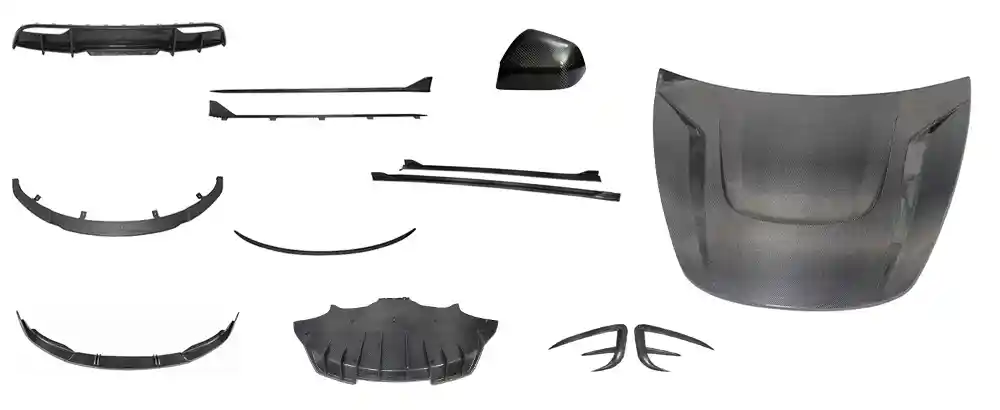
At Noah Automotive, we specialize in high-performance components for electric vehicles, including Model 3 carbon fiber body kits, suspension upgrades, and aerodynamic enhancements for the Tesla Model 3. Whether you’re driving a 2017 original or a 2024 Highland, we can help you maximize your vehicle’s performance and aesthetic potential.